

Custom Build or Major Remodel: How to Choose (2026 Guide)
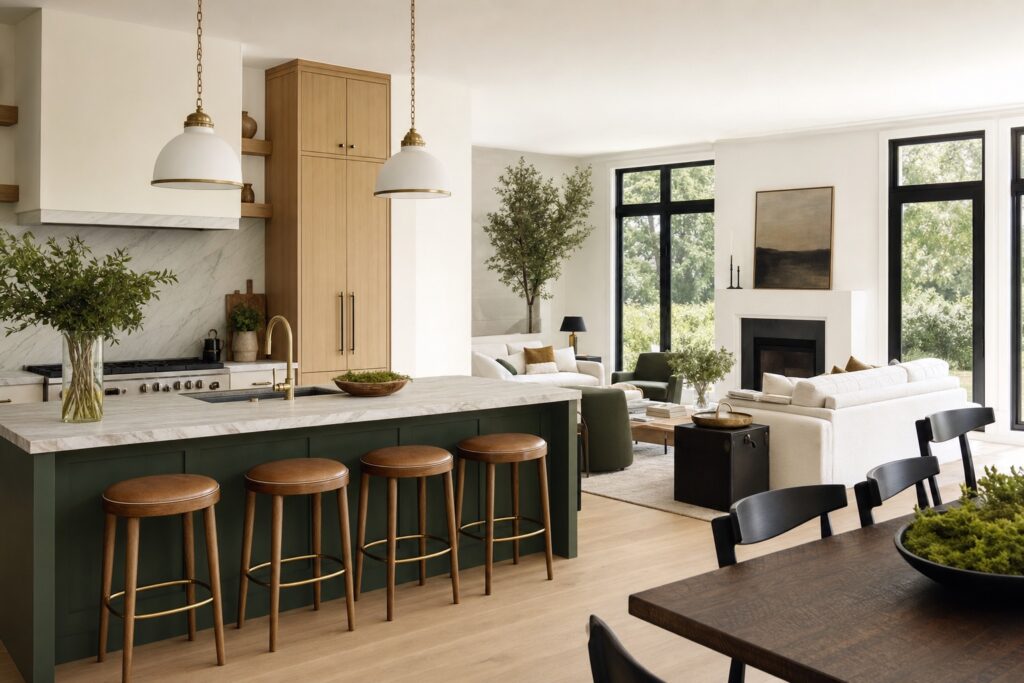
Many Northern Virginia homeowners reach a turning point: the house no longer fits the life inside it. The question becomes whether to transform the home you own or build something new from the ground up. Both can be the right answer. This guide gives you a clear framework to decide, with the cost, structural, lifestyle, and location factors that actually matter in 2026.
Table of Contents
Quick answer: build new or remodel?
Remodel when the home is in the right location, the structure and bones are sound, and your needs are focused on specific areas or a whole-home refresh that the existing footprint can support. Build new when you are reworking most of the floor plan, fighting outdated systems throughout, want something the current structure cannot accommodate, or have land that calls for a fresh start. The decision is rarely about cost alone; it is about how far your goals stretch the existing home, and whether the location is one you want to keep.
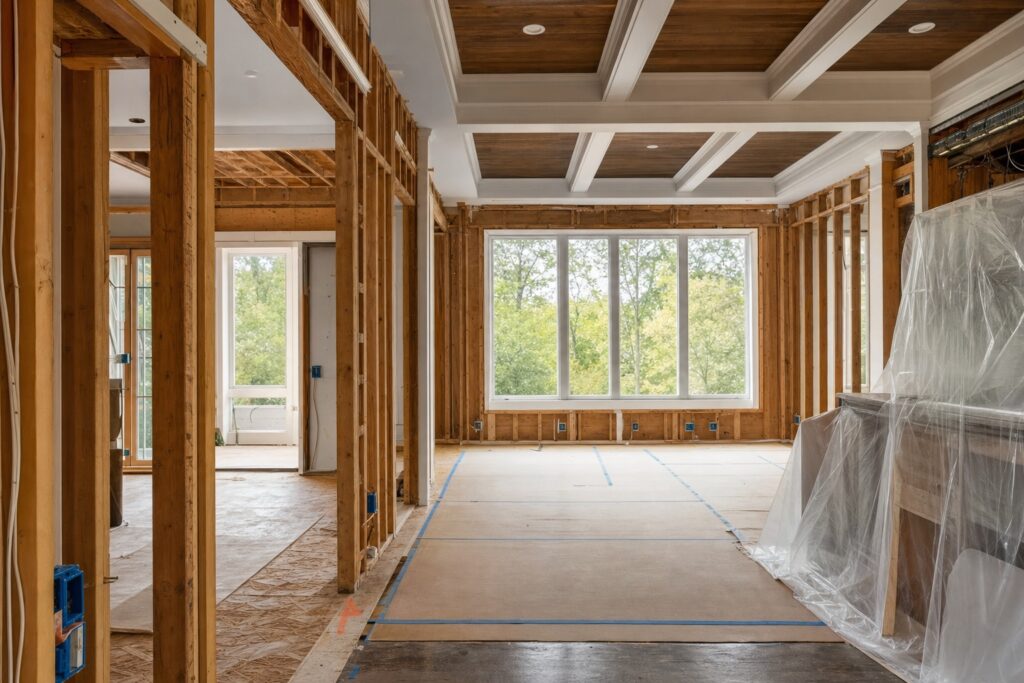
There is no universally correct choice. The right path depends on your home, your lot, your budget, your timeline, and how you want to live. Below is the framework we use with clients to make the decision with clarity instead of guesswork.
When a remodel is the smarter investment
A renovation or addition is often the better path when several of these are true.
The location is exactly where you want to be
Location is the one thing you cannot renovate. If your home sits in a neighborhood, school district, or setting you love, that is a powerful reason to stay and improve. In established Northern Virginia communities, a great lot in a great location is genuinely hard to replace, and remodeling lets you keep it.
The structure and systems are fundamentally sound
If the foundation, framing, roof, and major systems are in good condition or can be selectively upgraded, your renovation budget goes toward the spaces you live in rather than rebuilding what already works. A home with good bones is a strong candidate for transformation.
Your needs are focused
When the changes you want are concentrated, an opened-up kitchen and living area, a primary suite, a finished basement, or a single addition, a targeted remodel delivers a large lifestyle improvement for a fraction of the cost and disruption of building new.
You want to preserve character
Older and historic homes often have architectural character that is expensive or impossible to reproduce. A thoughtful luxury remodel can modernize how the home lives while preserving the details that make it special.
When building new wins
Building a custom home tends to be the better choice when the following apply.
You are changing most of the floor plan
If your wish list rearranges the majority of the home, moving the kitchen, reworking the structure, changing ceiling heights, relocating stairs, the cost and complexity of forcing those changes onto an existing structure can approach or exceed building new, with more compromises along the way.
The systems are outdated throughout
When wiring, plumbing, HVAC, insulation, and windows are all near the end of their life, you may be paying to rebuild the invisible house anyway. At that point, a new build lets you get modern performance everywhere instead of patching around old systems.
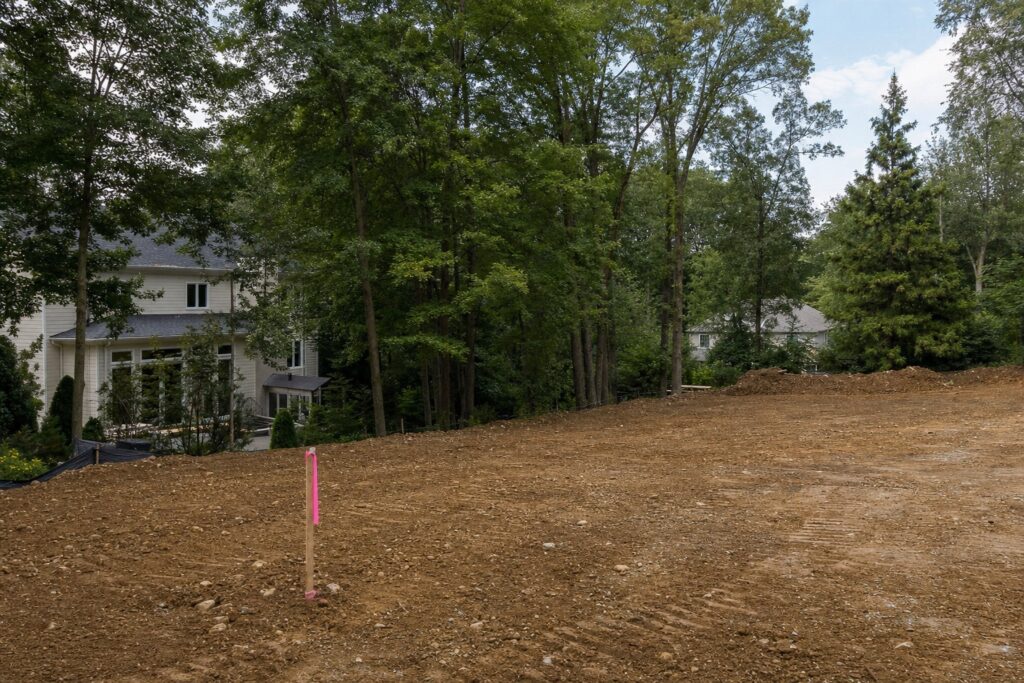
You want something the structure cannot support
Open spans, tall ceilings, large glass, a different roofline, or a fundamentally different way of living may simply not be achievable within the existing shell. A new build gives you a clean slate to design around exactly how you live.
You have land, or a teardown makes sense
If you own a lot, or your current in-town property carries high land value with a tired house on it, as is common in McLean, Vienna, and Great Falls, a teardown-and-rebuild or a build on acreage can deliver more long-term value than pouring money into an aging structure.
The honest cost comparison
Cost is usually the first question, and the honest answer is that it depends on scope. A focused remodel is almost always less expensive than building new. A whole-home renovation that touches structure and systems, however, can approach the cost of new construction, sometimes with more constraints, because you are working around what already exists. The chart below frames the trade-off.
| Path | Relative cost | Best when |
|---|---|---|
| Targeted remodel | Lowest | One or two areas, sound structure, great location |
| Addition | Moderate | You need more space but love the home and lot |
| Whole-home renovation | High | Comprehensive update, character worth preserving |
| Build new / teardown | Highest | Reworking everything, outdated systems, or land |
The trap to avoid is a renovation that grows, one item at a time, until it costs nearly as much as new construction but delivers a compromised result. A disciplined builder will tell you honestly when your remodel wish list has crossed the line where building new is the better value. For a deeper look at construction pricing, see our guide on custom home cost in Northern Virginia.
What you can and cannot change in a remodel
Understanding the limits of renovation helps set expectations. In a remodel you can usually reconfigure non-structural interior walls, update finishes throughout, modernize kitchens and baths, improve systems, add insulation, replace windows, and finish basements. With more effort and engineering, you can remove some structural walls, raise certain ceilings, and add square footage through an addition. What is hardest and most expensive is changing the fundamental structure, foundation, and footprint, relocating the home on the lot, or achieving a completely different architectural form. When your goals live mostly in that hardest category, new construction is often the cleaner path.
The middle path: home additions
Many homeowners do not need to choose between staying exactly as they are and building entirely new. A well-designed home addition can add the space and function you are missing, a primary suite, an expanded kitchen and living area, an in-law suite, a sunroom, while keeping the home and location you love. The keys to a successful addition are designing it so it looks original to the home rather than tacked on, and integrating it cleanly with existing structure and systems. Additions are frequently the most efficient way to solve a space problem without the cost and disruption of a full rebuild.
Whole-home renovation: transformation without moving
A whole-home renovation sits between a targeted remodel and a new build. It reimagines how the entire home lives, updating layout, finishes, and systems comprehensively, while keeping the existing structure and location. This path suits homeowners who love where they live and the character of their home but want it to function like a brand-new house. It is a significant investment and a significant disruption, but for the right home in the right location, the result is a home that feels entirely new without leaving the place you love.
Timeline: how long each path takes
Timelines vary with scope, design, permitting, and site conditions, but the general pattern holds: a targeted remodel is the fastest, an addition takes longer, a whole-home renovation longer still, and a new build typically takes the most time from first conversation to move-in. New construction also front-loads more design and permitting time before visible work begins. If speed is a major factor, a focused remodel may win, but rushing any of these paths is how quality and budget both suffer. Our guide on the custom home building process details the phases of a new build.
Living through it: disruption and logistics
One factor homeowners underweight is what it is like to live through the project. A whole-home renovation often means moving out for a period, while a targeted remodel may let you stay with some inconvenience. A new build on a separate lot lets you remain in your current home until the new one is ready, which is a real quality-of-life advantage. Factor in the cost and stress of temporary housing, storage, and disruption when you compare paths; it is a real part of the decision, not a footnote.
Permitting and approvals: how they differ
Both remodels and new builds require permits, but the scope differs. New construction goes through full plan review, zoning, stormwater, and often health department approval for wells and septic on rural lots. Major renovations and additions trigger building permits and, depending on scope, structural, electrical, mechanical, and plumbing review, plus HOA architectural approval where applicable. Work in historic districts carries additional review. A builder who knows the local processes across Prince William, Loudoun, Fairfax, and the Fredericksburg and Winchester areas keeps either path moving and avoids costly missteps.
Resale and long-term value
Both paths can build value when done well. A high-quality renovation in a desirable location can deliver strong returns and make a dated home competitive with new construction. A new custom home built to current standards in a sought-after community tends to hold value well over time. The risks are over-improving for the neighborhood in a remodel, or over-personalizing a new build so narrowly that it limits future buyers. The right choice considers not just how you will live in the home, but how it will stand in the market years from now.
The emotional and lifestyle factors
Numbers matter, but so does how you want to live. Some families are deeply attached to their home and neighborhood and want to honor that by transforming what they have. Others are ready for a clean slate and the chance to design every space around how they actually live. Neither is wrong. The best decision aligns the practical realities, cost, structure, location, timeline, with what will genuinely make you happy in the home for the next decade and beyond.
Northern Virginia specifics
The region shapes the decision. In close-in areas like McLean, Great Falls, and Vienna, high land values often tip the math toward teardown-and-rebuild, because the lot is the lasting asset. In established communities across Prince William and Loudoun, sound homes in great locations are excellent renovation candidates. On acreage in the Virginia Piedmont and the Fredericksburg and Winchester areas, available land makes new custom builds attractive. Local knowledge of lots, communities, and approvals is part of making the right call. Explore our service areas to see where we work.
Why design-build helps either way
Whichever path you choose, a design-build approach helps you decide and execute with confidence. Because one team handles both design and construction, the cost and feasibility of each option are evaluated honestly from the start, not discovered later. A design-build partner can sketch what a remodel could achieve and what a new build would deliver, compare them with real numbers, and help you choose the path that best serves your goals and budget. That clarity, before you commit, is one of the most valuable things a builder can offer.
How Valor Builder helps you decide
At Valor Builder, we start by understanding your goals, your home, and your site, then map both paths honestly. We will tell you when a remodel is the smarter investment and when building new is the better value, with real numbers rather than a sales pitch for whichever is more profitable. Our process is built on disciplined planning and transparent communication, so by the time you commit to a direction, you understand exactly what you are getting and why.
A decision framework you can work through
If you want a structured way to think it through, work through these questions honestly. The more your answers point in one direction, the clearer your path.
- Do you love your location, or are you open to moving?
- Are the foundation, framing, roof, and systems sound, or near the end of their life?
- Do your goals touch one or two areas, or most of the home?
- Do you need a fundamentally different floor plan or architectural form?
- Do you own land, or does your current lot carry high value with a tired house?
- How important is keeping the home is existing character?
- Can you tolerate living through construction, or do you need to stay put until a new home is ready?
- What is your honest all-in budget, including soft costs and contingency?
If most answers favor keeping the location and the structure is sound, a remodel or addition likely wins. If most answers point to reworking everything, outdated systems, or land, building new is probably the better value.
The cost of staying versus the cost of moving
One comparison homeowners overlook is the full cost of selling and buying versus renovating in place. Selling a home carries agent commissions, closing costs, staging, and the transaction friction of buying again, often adding up to a meaningful percentage of the home is value. When you weigh a remodel against moving to a different house, the renovation budget should be compared not just to a new purchase price but to the total cost of the move. In many cases, investing in the home you already own and love is more efficient than absorbing the full cost of transacting twice.
Hidden costs of remodeling an older home
Renovations carry a particular kind of risk: the surprises hidden inside an existing structure. Older Northern Virginia homes can reveal outdated wiring that must be brought to code, plumbing that needs replacement, structural issues hidden behind finishes, asbestos or lead in very old homes, and framing that does not match original drawings. These conditions are not reasons to avoid remodeling; they are reasons to budget a healthy contingency and to work with a builder who investigates carefully before committing to a fixed scope. A thoughtful builder opens up the unknowns early where possible, so surprises are smaller and fewer.
Hidden costs of building new
New construction has its own less-obvious costs. Land and sitework, covered in depth in our cost guide, can be substantial, especially on rural lots needing wells, on-site sewage, long driveways, and stormwater management. Design and engineering fees, permits, landscaping, and the longer financing carry of a multi-month build all add to the total. A new build also asks more decisions of you, every selection is yours to make, which is a gift and a responsibility. Knowing these costs upfront keeps the comparison honest.
Matching the path to your life
The growing family
Families that have outgrown their space but love their neighborhood are often ideal candidates for an addition or a whole-home renovation that adds bedrooms, expands living areas, and modernizes how the home functions, without leaving the community and schools they value.
Aging in place
Homeowners planning to stay for the long term may prioritize a main-level primary suite, wider doorways, step-free entries, and a layout that works as needs change. These goals can often be achieved through a targeted remodel or addition, or designed into a new build from the start.
Multigenerational living
An in-law suite addition, whether attached or integrated, lets families share a property while preserving privacy and independence. This is one of the fastest-growing reasons homeowners choose to add space rather than move.
Working from home
The shift to working from home has made dedicated offices, quiet zones, and flexible spaces a priority. Sometimes this is a simple remodel; sometimes it tips a whole-home renovation or a new build that designs work and life to coexist gracefully.
Types of additions to consider
- Primary suite additions: a private retreat with a spa-quality bath and walk-in closet, often on the main level.
- In-law and guest suites: independent living space for family or guests.
- Kitchen and living expansions: opening and enlarging the heart of the home.
- Garage additions: covered parking, storage, and often bonus space above.
- Sunrooms and covered porches: bringing the outdoors into daily life. See covered porches and outdoor living.
The best addition feels original to the home and solves the actual problem you set out to fix, rather than simply adding square footage for its own sake.
Finishing a basement: an efficient win
For many homes, finishing a basement is one of the most cost-effective ways to gain significant living space, because the structure already exists. A finished basement can add a recreation room, gym, guest suite, theater, or office at a lower cost per square foot than above-grade additions. If your home has unfinished lower-level space and your needs are about more room rather than a different layout, this is often the smartest first move.
How to evaluate your home is bones
Before deciding, it helps to understand the condition of the structure and systems. A builder or inspector will look at the foundation for cracks or settlement, the framing for soundness, the roof for remaining life, the electrical panel and wiring for capacity and code, the plumbing for material and condition, the HVAC for age and efficiency, and the windows and insulation for performance. If most of these are sound, renovation keeps your budget focused on living spaces. If most are failing, you may be paying to rebuild the invisible house, which shifts the math toward new construction.
Energy and comfort: a real difference
A new build can be designed for modern energy performance throughout, tight envelope, efficient systems, quality windows, while a remodel improves performance selectively. If lowering energy use and improving comfort across the whole home is a top priority, new construction has an edge, though a deep whole-home renovation can close much of the gap. Either way, investing in the envelope and systems pays back in comfort and operating cost for decades.
Sustainability and longevity
There is also an argument for renovation as the more sustainable choice in many cases, because it reuses an existing structure rather than building entirely new. For homeowners who value that, a high-quality renovation that brings an older home up to modern performance can be both responsible and rewarding. The most sustainable home, ultimately, is one built or renovated well enough to last for generations without constant repair.
Common mistakes to avoid
- Letting a remodel grow item by item until it costs nearly as much as new construction.
- Underestimating the disruption and temporary-housing cost of a whole-home renovation.
- Skipping a real structural and systems assessment before committing.
- Over-improving beyond what the neighborhood supports.
- Choosing a path based on cost alone, ignoring how you actually want to live.
- Working with a builder who recommends the path that profits them rather than the one that serves you.
The role of honest counsel
Perhaps the most valuable thing a builder brings to this decision is honesty. A firm that does both remodels and new construction has no reason to push you toward one path for its own sake, and can instead help you see clearly which option delivers more of what you want for your budget. That honest counsel, offered before you commit, is worth seeking out. It is the difference between a decision you feel confident about and one you second-guess later.
Financing differs by path
How you pay for the work depends on the path. Renovations are commonly financed through home equity, a renovation loan, or cash, and the approval is generally simpler than new construction. Building new, or a renovation extensive enough to be treated like new construction, typically uses a construction loan that funds the work in stages and converts to a permanent mortgage. Lenders want a clear scope and budget either way, and rates, terms, and requirements are set by the lender and the broader market, not the builder. Engaging your lender early, with a well-documented plan, makes either path smoother and helps you compare the true monthly and total cost of each option.
Timelines, more precisely
While every project is unique, the relative order is consistent. A focused kitchen or bath remodel is measured in weeks to a few months. An addition adds design and permitting time on top of construction. A whole-home renovation is a multi-month commitment, often with a period of moving out. A new custom build is typically the longest from first conversation to move-in, because design, engineering, and permitting precede visible construction. If your decision is partly driven by a deadline, a school year, a growing family, a relocation, build the timeline into your comparison honestly rather than hoping to compress it later. Rushed construction is where quality and budget both slip.
Neighborhood-by-neighborhood thinking
The right answer often depends on where you are. In McLean, Great Falls, and Vienna, land values are high enough that replacing a dated home with a new custom build frequently makes long-term sense, because the lot is the enduring asset. In established communities across Prince William and Loudoun, many homes have sound structure in excellent locations, making them strong renovation candidates. On acreage in the Fredericksburg and Winchester areas and the broader Piedmont, available land and rural settings make new custom homes and modern farmhouses especially appealing. Local knowledge of what each community supports, and what it values, is part of choosing well.
What a great outcome looks like
However you decide, a successful project shares the same traits: a clear plan settled before work begins, a realistic budget with an honest contingency, a builder who communicates and keeps the work moving, and a result that fits how you live and is built to last. The path, build or remodel, matters less than the discipline with which it is planned and executed. A well-run renovation can be transformational, and a well-run new build can be the home of a lifetime. A poorly planned version of either is a source of stress and regret. Choose the path that fits your goals, then choose a builder who will execute it with care.
A short glossary
- Whole-home renovation: a comprehensive update of layout, finishes, and systems within the existing structure.
- Addition: new square footage added to an existing home.
- Teardown-rebuild: removing an existing structure to build new on the same lot.
- Gut renovation: stripping a home to the studs to rebuild interiors and systems.
- Good bones: sound foundation, framing, roof, and major systems.
- Design-build: one team managing both design and construction.
Bringing it together
The choice between building a custom home and undertaking a major remodel comes down to how far your goals stretch the existing home, how sound its structure and systems are, how much you value the location, and how you want to live for the next decade. Run your situation through the framework, weigh the honest costs of each path including the costs that hide, and lean on a builder who will tell you the truth rather than sell you the more profitable option. Make the decision with that clarity, and either path can lead to a home you love.
Frequently asked questions
Is it cheaper to remodel or build new?
A targeted remodel is almost always cheaper than building new. A comprehensive whole-home renovation, however, can approach the cost of new construction, sometimes with more constraints, because you are working around the existing structure.
At what point does a remodel stop making sense?
When your changes rework most of the floor plan, require replacing systems throughout, or fight the existing structure, the cost and compromises often make new construction the better value. A disciplined builder will tell you when you have crossed that line.
Can I add square footage without building new?
Yes. A well-designed home addition can add the space you need while keeping your home and location, and when done well it looks original rather than added on.
Will I have to move out during the project?
It depends on scope. A targeted remodel may let you stay with some inconvenience, while a whole-home renovation often requires moving out temporarily. A new build on a separate lot lets you stay in your current home until the new one is ready.
How do I know if my home has good bones?
A builder can assess the foundation, framing, roof, and major systems to determine whether they are sound or near the end of their life. Homes with sound structure and systems are strong renovation candidates.
Does Valor Builder do both remodels and new construction?
Yes. We build custom homes and handle estate remodels, whole-home renovations, and additions across Northern Virginia and the Piedmont, which means we can recommend the right path honestly rather than the one that simply sells more.
How long does a whole-home renovation take compared to building new?
A whole-home renovation is typically faster than building new, but both are multi-month commitments. New construction front-loads more design and permitting time before visible work begins, while a renovation can often start sooner but may require moving out.
Which adds more value, a remodel or a new build?
Both can build strong value when done well in a desirable location. A new custom home built to current standards tends to hold value over time, while a high-quality renovation can make a dated home competitive with new construction. The key in either case is quality and avoiding over-improvement for the neighborhood.
Questions to ask a builder before you decide
The right builder will help you make this decision well, not just execute it. Before you commit to either path, ask: Will you assess my home is structure and systems honestly before recommending a direction? Can you show me, with real numbers, what a remodel would achieve versus a new build? How do you handle the surprises that come up in older homes? How do you keep a project on budget and schedule? Who will communicate with me, and how often? A builder who answers these clearly, and who does both renovations and new construction, can give you honest counsel instead of a one-size answer.
Red flags to watch for
- A builder who pushes you toward one path without assessing your home or lot.
- A renovation quote with no contingency for the unknowns inside older walls.
- A number that seems low but lacks a detailed scope to support it.
- Vague answers about communication, schedule, and who is accountable.
- Pressure to decide quickly without a clear plan in hand.
The decision between building and remodeling is too important to rush or to base on a sales pitch. Take the time to understand your home, your lot, and your real options, with a builder who earns your trust by being straight with you.
Two representative scenarios
Consider a family in an established Loudoun County neighborhood with a structurally sound 1990s home they love, in a school district they want to stay in. Their goals center on opening the kitchen and living area, adding a main-level primary suite, and refreshing finishes. For them, a whole-home renovation with a targeted addition keeps the location they value and delivers a home that lives like new, almost certainly the better value than starting over.
Now consider a family on a high-value lot in McLean with a tired, compartmentalized home whose systems are all near the end of their life, who want open spaces, tall ceilings, and a fundamentally different floor plan. For them, forcing those changes onto the old structure would cost nearly as much as new construction with more compromises, so a teardown-and-rebuild custom home is likely the smarter long-term investment. These scenarios are illustrative; your own answer depends on your specific home, lot, goals, and budget.
The bottom line
There is no single right answer to build or remodel, only the right answer for your situation. Weigh location, structure, scope, timeline, disruption, and how you want to live, then choose a builder who will help you decide honestly and execute with discipline. Do that, and whichever path you choose can lead to a home that fits your life and stands for decades.
Should I get advice before I have decided which path to take?
Yes. The best time to involve a builder is before you have committed to a direction, because that is when honest analysis of both paths is most valuable. A good builder can help you compare a remodel and a new build with real numbers, so your decision is informed rather than assumed.
What if I am not sure my lot can support what I want?
Have a builder evaluate the lot and the existing structure before you commit. Site conditions, zoning, setbacks, and the home is bones all shape what is possible, and knowing those realities early prevents expensive surprises later.
Can a remodel really feel like a brand-new home?
Yes. A comprehensive whole-home renovation can update the layout, finishes, and systems so thoroughly that the home lives like new while keeping the location and character you love. The difference from new construction is that you are working within the existing footprint and structure, which a skilled builder can transform far more than most homeowners expect. For homes with good bones in great locations, this is often the most rewarding path of all.
What is the first step in deciding?
The first step is an honest assessment of three things: how far your goals stretch the existing home, the condition of its structure and systems, and how much you value the location. With those answers, and a builder who will compare both paths with real numbers, the right direction usually becomes clear. From there, disciplined planning turns the decision into a project you can feel confident about from start to finish.
Does building new always cost more than remodeling?
Not always in the way people assume. A focused remodel costs less than building new, but a comprehensive whole-home renovation that touches structure and systems can reach a similar total to new construction, sometimes with more constraints. The honest comparison is not remodel versus build in the abstract, but your specific scope on your specific home, weighed against a new build on your lot, with all the soft costs and contingencies counted on both sides.
Make the right call with confidence
Choosing between a custom build and a major remodel is one of the most consequential decisions a homeowner makes, and it deserves real analysis rather than a gut guess. If you are weighing the two, request a consultation and we will walk your home or your lot, talk through your goals, and lay out both paths with honest numbers so you can choose with confidence.
Related reading: How Much Does It Cost to Build a Custom Home in Northern Virginia? and What to Expect During the Custom Home Building Process. Back to the Valor Builder blog.