

Building & Remodeling in McLean and Great Falls: A Homeowner’s Guide (2026)
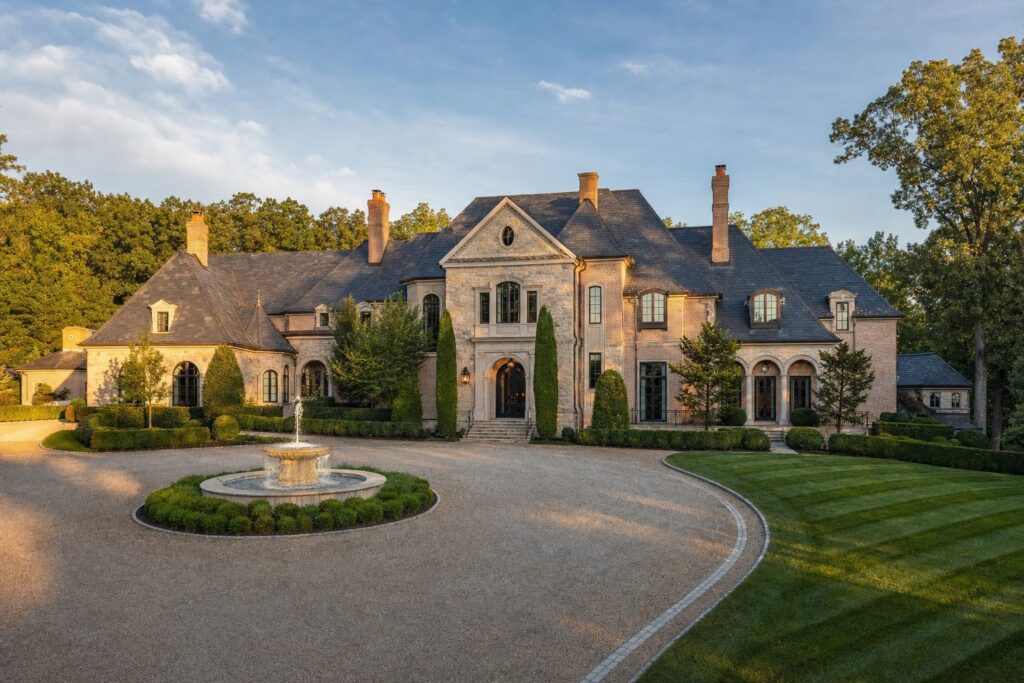
Building or remodeling in McLean and Great Falls in 2026 means budgeting for premium work: a custom home builder McLean homeowners hire will typically charge $500 to $800 or more per square foot, and major whole-home remodels carry a similar premium. These two Northern Virginia markets reward quality and punish shortcuts, because resale buyers here scrutinize finishes, scrutinize craftsmanship, and pay accordingly. This guide walks through real costs, the local lot and permitting realities that drive those numbers, the project types that make sense, and how to plan a build or remodel that holds its value over time.
Table of Contents
Quick answer: what building and remodeling costs in McLean and Great Falls
In 2026, a custom home builder McLean and Great Falls clients work with will price new construction at roughly $500 to $800+ per square foot, putting most custom homes in the $1.8 million to $5 million-plus range depending on size, site, and finish level. Whole-home remodels run $300 to $600 per square foot, major additions $400 to $700 per square foot, and high-end kitchens and baths land in the tens of thousands to low hundreds of thousands. These numbers reflect large lots, demanding terrain, Fairfax County permitting, and the unusually high finish expectations that define both communities. The table below summarizes typical 2026 ranges by project type so you can frame your budget before you ever call a builder.
| Project type | Typical 2026 range | Notes |
|---|---|---|
| New custom home | $500-$800+/sq ft | Teardown-and-rebuilds common; site work adds cost |
| Whole-home remodel | $300-$600/sq ft | Premium for structural and systems work |
| Major addition | $400-$700/sq ft | Foundation, tie-in, and roofline drive cost |
| Kitchen remodel (high-end) | $80,000-$250,000+ | Cabinetry, stone, and appliances set the ceiling |
| Primary bath remodel | $45,000-$150,000+ | Tile, glass, and plumbing relocation matter most |
| Outdoor living (deck, patio, kitchen) | $50,000-$300,000+ | Grading, drainage, and hardscape on sloped lots |
Why a custom home builder in McLean and Great Falls costs more
The premium pricing in these two communities is not arbitrary. A custom home builder McLean and Great Falls homeowners trust is pricing in a specific set of local realities that simply do not exist in many other markets. Large lots, challenging terrain, split utility situations, frequent teardowns, and a buyer pool that expects flawless execution all push costs upward. Understanding these drivers helps you build a realistic budget and avoid the sticker shock that catches many first-time builders off guard. Below are the structural reasons your project in McLean or Great Falls will cost more than a comparable home in many parts of Loudoun or Prince William County.
Large lots and the cost of land itself
McLean and Great Falls are defined by generous lot sizes, with Great Falls in particular featuring multi-acre parcels that are increasingly rare in close-in Northern Virginia. That land carries a high per-square-foot value, and it shapes everything that follows. Larger lots mean longer driveways, more extensive landscaping, bigger septic fields where applicable, and greater distances for utility runs. Buyers in these areas expect the home to sit gracefully on its lot with mature plantings, privacy screening, and thoughtful grading. The land is often the single largest line item in a project here, and its cost sets the bar for the level of home that makes financial sense to build on it.
Well-and-septic versus public utilities
One of the sharpest distinctions between the two communities is infrastructure. Much of Great Falls relies on private well-and-septic systems, while McLean is largely served by public water and sewer. Well-and-septic adds real cost and complexity: you need soil testing and perc tests, an engineered drain field, a septic permit through Fairfax County, and ongoing maintenance planning. A failed perc test can shrink your buildable footprint or force an alternative system that costs significantly more. On public utilities in McLean, you avoid those steps but may pay connection and tap fees. Knowing which system governs your lot is one of the first things a builder evaluates, because it changes both the budget and the timeline.
Sloped, rocky terrain and foundation cost
Both McLean and Great Falls sit on terrain that can be steeply sloped and, in places, genuinely rocky. Rock encountered during excavation may require hammering or blasting, which is expensive and slow. Sloped sites demand more sophisticated foundations, retaining walls, and drainage systems to manage water and prevent settlement. A walkout basement that looks like a bonus on paper may require substantial grading and waterproofing to execute correctly. Drainage is not optional here; poor water management is one of the leading causes of expensive structural problems down the road. A capable builder budgets generously for site work because the ground itself is one of the least predictable parts of any project in these communities.
Teardown-and-rebuild as the default
Because the land is so valuable and many existing homes are dated relative to the neighborhood, teardown-and-rebuild has become the default path in much of McLean and Great Falls. Buying an older home, demolishing it, and building new is often more sensible than a deep renovation when the existing structure no longer matches the lot’s value. Demolition, debris hauling, and disconnecting utilities all add cost, and you may need to navigate existing tree preservation requirements and stormwater rules. The upside is a clean slate: a home designed precisely for how you live, with no compromises inherited from a previous floor plan. Teardowns require careful permitting and sequencing, which is where an experienced local builder earns their fee.
Very high finish expectations and resale
Perhaps the most important cost driver is intangible: expectation. In McLean and Great Falls, resale rewards quality and penalizes shortcuts. Buyers at this price point notice misaligned tile, hollow-core doors, builder-grade fixtures, and cabinetry that does not reach the ceiling. They pay premiums for solid construction, designer kitchens, spa-level baths, and genuine materials like natural stone and hardwood. This means cutting corners to save money often backfires at resale, eroding more value than it saved. The smart approach is to invest where buyers look hardest and economize quietly where they do not, a balance an experienced builder helps you strike.
Project types: what you can build or remodel
Homeowners in McLean and Great Falls pursue a wide range of projects, from ground-up custom homes to focused kitchen and bath renovations. Each project type has its own cost structure, timeline, and set of local considerations. Understanding the options helps you match your goals and budget to the right scope. Below is a breakdown of the most common projects in these communities, with the local realities that shape each one. Whether you are starting from raw land, reimagining an entire house, or upgrading the rooms you use most, the right scope depends on your lot, your timeline, and how long you plan to stay.
Ground-up custom homes
A custom home is the fullest expression of building in these communities. You control the floor plan, the architectural style, the systems, and every finish, designing a home tailored to your family and your lot. Custom homes here run $500 to $800 or more per square foot, and the design-build process typically spans well over a year from first drawings to move-in. The reward is a home with no compromises: ceiling heights, window placement, kitchen layout, and primary-suite proportions all built around how you actually live. On the large lots typical of Great Falls, custom homes can include features like detached garages, pool houses, and expansive outdoor living that would be impossible on smaller parcels elsewhere.
Whole-home remodels
For homeowners who love their lot and location but not their current house, a whole-home remodel reconfigures and modernizes the entire structure. This can include opening up dated floor plans, replacing systems, upgrading insulation and windows, and bringing every finish up to current standards. Whole-home remodels run $300 to $600 per square foot, and the premium reflects structural and mechanical work hidden behind the walls. A gut remodel lets you keep a desirable footprint and address everything at once rather than living through repeated smaller projects. It is often the right call when the home’s bones are sound and its location is irreplaceable, but its finishes and layout no longer meet the neighborhood’s standard.
Additions that expand without leaving
Additions let you gain space without relocating, whether that is a primary-suite wing, an expanded kitchen and family room, an in-law suite, or a second story. Major additions run $400 to $700 per square foot because they involve new foundation, structural tie-ins to the existing home, and matching rooflines and exteriors so the result looks original rather than bolted on. On sloped lots, additions may require additional grading and drainage work. The art of a great addition is seamlessness: when finished, no one should be able to tell where the old house ends and the new construction begins. Done well, an addition can transform how a home functions while preserving the parts you already love.
Kitchens and baths
Kitchens and baths are where buyers in McLean and Great Falls look hardest, and where smart investment pays off most directly. A high-end kitchen remodel runs $80,000 to $250,000 or more, driven by custom cabinetry, natural-stone countertops, professional-grade appliances, and quality tile and lighting. A primary bath remodel runs $45,000 to $150,000 or more, with frameless glass, large-format tile, heated floors, and freestanding tubs setting the high end. These rooms deliver some of the strongest resale returns when executed to neighborhood standards. Because they involve plumbing, electrical, and often structural changes, even a single-room remodel benefits from the coordination an experienced builder provides.
Outdoor living on premium lots
The large lots of McLean and especially Great Falls invite serious outdoor living: covered porches, outdoor kitchens, fire features, pools, and multi-level patios. Outdoor projects run $50,000 to $300,000 or more depending on scope, and on sloped or rocky lots, grading, retaining walls, and drainage make up a large share of the budget. Quality outdoor living extends usable living space and is increasingly expected at this price point. The key is treating the outdoor design with the same rigor as the interior, integrating materials, sightlines, and drainage so the result feels like a natural extension of the home rather than an afterthought added later.
Fairfax County permitting, inspections, and process
Every build and major remodel in McLean and Great Falls runs through Fairfax County permitting and inspections, and understanding that process up front prevents costly surprises. The county reviews plans for zoning compliance, structural integrity, stormwater management, and life-safety codes before issuing permits, and inspectors verify work at key stages throughout construction. Permitting timelines vary with project complexity, and certain site conditions trigger additional review. A builder fluent in Fairfax County’s requirements keeps your project moving and avoids the rework that comes from missed requirements. Below are the parts of the process that most affect your timeline and budget in these two communities.
Plan review and zoning
Before a shovel hits the ground, your plans go through Fairfax County review for zoning compliance, setbacks, lot coverage, and height limits. McLean and Great Falls have specific zoning that governs how much of your lot you can build on and how close to property lines you can go. Resource Protection Areas near streams and wetlands add another layer of review and can restrict where you build. Getting plans right the first time matters, because revisions extend the timeline. An experienced local builder and architect anticipate these requirements during design, so your plans clear review with minimal back-and-forth rather than bouncing through multiple correction cycles.
Stormwater, grading, and tree preservation
Fairfax County takes stormwater and grading seriously, especially on the sloped lots common to these communities. Larger projects require stormwater management plans that control runoff and protect downstream properties. Tree preservation requirements may limit clearing and require protective measures during construction, which matters on the wooded lots typical of Great Falls. These rules protect the character and ecology of the area, but they also add engineering and documentation to your project. Planning for them early, rather than treating them as obstacles discovered mid-project, keeps your build on schedule and avoids stop-work situations that erode both budget and momentum.
Inspections and certificate of occupancy
Throughout construction, Fairfax County inspectors verify work at defined milestones: footings, framing, rough mechanicals, insulation, and final completion. Each inspection must pass before the next phase proceeds, which is why sequencing and scheduling discipline matter so much. For well-and-septic properties in Great Falls, health-department approvals add steps. The process culminates in a certificate of occupancy, the county’s confirmation that the home is safe and code-compliant to live in. A builder who manages inspections proactively, scheduling them tightly and ensuring work is ready, keeps the project flowing rather than stalling between phases waiting on the county.
Building and remodeling by Northern Virginia area
While McLean and Great Falls anchor this guide, Valor Builder serves the broader Northern Virginia region, and conditions vary meaningfully from one area to the next. Lot sizes, utility infrastructure, terrain, permitting jurisdiction, and buyer expectations all shift as you move across the region. Understanding these differences helps you set realistic expectations for your specific location. Below is how building and remodeling realities compare across the communities we serve, from the premium close-in markets to the growing western suburbs.
McLean and Great Falls
McLean and Great Falls represent the premium end of Northern Virginia homebuilding. McLean offers public utilities, close-in convenience, and exceptional schools, with strong demand for custom homes and high-end remodels on substantial lots. Great Falls offers larger, more rural parcels, frequent well-and-septic systems, and a market that prizes privacy and craftsmanship. Both communities support custom home builder McLean pricing of $500 to $800-plus per square foot, and both reward quality at resale. Teardowns are common in both, and the high finish expectations mean that cutting corners is rarely the economical choice. These are markets where doing it right the first time protects your investment.
Vienna, Oakton, and Fairfax
Just west and south of McLean, Vienna, Oakton, and Fairfax offer a mix of established neighborhoods and strong remodeling demand. Lots tend to be somewhat smaller than Great Falls but still generous, and most properties are on public utilities. These communities see active teardown-and-rebuild and whole-home remodel activity as buyers invest in well-located older homes. Costs run somewhat below the McLean and Great Falls ceiling but still reflect Fairfax County permitting and solid finish expectations. For many families, these areas offer an attractive balance of location, schools, and value, with custom and remodel projects that deliver strong returns at resale.
Arlington and Alexandria
Arlington and Alexandria are denser, close-in markets where lots are smaller and infill construction dominates. Custom homes and pop-top additions are common as homeowners maximize valuable urban land. Permitting runs through Arlington County and the City of Alexandria respectively, each with its own requirements, and historic districts in Alexandria add review layers. Costs per square foot remain high given the land values and tight site conditions, which can complicate access and staging. These markets reward efficient, well-designed homes that make the most of compact lots, and remodels that modernize without expanding beyond what the lot allows.
Loudoun County
Loudoun County, including Ashburn and Leesburg, blends established suburbs with newer development and rural western areas. Lot sizes vary widely, from compact subdivision parcels to multi-acre estates in the Piedmont, where well-and-septic again becomes common. Loudoun has its own permitting process distinct from Fairfax County. Building and remodeling costs are often somewhat lower than in McLean and Great Falls, though premium projects in sought-after areas approach those levels. Loudoun appeals to buyers seeking more land and newer infrastructure, and it supports a healthy market for both custom homes and substantial remodels across a range of budgets.
Prince William County
Prince William County, including Gainesville, Haymarket, and Bristow, offers the most accessible price points in the region along with significant land in its western reaches. Valor Builder is based in Bristow, giving us deep familiarity with the county’s permitting and conditions. Lots range from suburban to rural estate parcels, with well-and-septic common in the western areas near the Piedmont. Costs run below the McLean and Great Falls ceiling, making custom homes and large remodels achievable for a broader range of budgets. The county is a strong choice for families wanting more space and value while staying within reach of the wider Northern Virginia economy.
How to control cost on a McLean or Great Falls project
Premium markets do not require unlimited budgets, but they do require disciplined decisions. The homeowners who get the most for their money in McLean and Great Falls are those who plan thoroughly, invest where it matters, and avoid the changes and surprises that inflate cost mid-project. Below are the most effective ways to keep your build or remodel on budget without sacrificing the quality these communities demand. The goal is not to spend less indiscriminately, but to spend deliberately, putting dollars where they protect value and trimming where buyers will never notice.
Invest where buyers look, economize where they do not
The single most effective cost strategy is allocating your budget to high-visibility, high-impact areas. Kitchens, primary baths, the entry experience, and main living spaces deserve premium investment because that is where buyers form their impression of the home. Secondary bedrooms, utility spaces, and back-of-house areas can use quality but more restrained finishes without hurting resale. This is not about cutting corners; it is about matching the level of finish to where it actually matters. A skilled builder helps you draw these lines so your budget concentrates where it generates the strongest return rather than spreading thin across the whole home.
Lock the design before you build
Changes mid-construction are the most expensive dollars you will ever spend. A change that costs little on paper during design can cost many times more once framing is up and finishes are ordered. The most cost-controlled projects are those where the design, selections, and specifications are fully resolved before construction begins. This requires patience during planning and a willingness to make decisions early, but it pays off in a smoother build and a tighter budget. A design-build approach, where the builder is involved during design, helps catch cost issues before they are locked into the plans.
Plan for site conditions honestly
On the rocky, sloped lots of McLean and Great Falls, the biggest budget surprises come from the ground. Honest site evaluation up front, including soil testing, drainage analysis, and rock assessment where possible, lets you budget realistically rather than discovering problems after demolition. Building a contingency into your budget for site conditions is wise, because excavation is inherently unpredictable. A builder who has worked these communities knows what to look for and will encourage thorough site work rather than optimistic assumptions, sparing you the worst kind of surprise: a structural cost you did not see coming after the project is already underway.
Timelines: what to expect
Building and remodeling in McLean and Great Falls takes time, and realistic timeline expectations prevent frustration. Premium projects move deliberately because quality work, custom materials, and county processes cannot be rushed without consequences. Below are typical timelines for the major project types, recognizing that site conditions, design complexity, and permitting can all extend them. Understanding the rhythm of a project helps you plan your life around it, whether that means arranging temporary housing during a teardown or sequencing a remodel to minimize disruption to your family.
| Project type | Typical timeline | Main variables |
|---|---|---|
| New custom home | 14-24+ months | Design, permitting, site work, finish level |
| Whole-home remodel | 9-18 months | Scope, structural changes, selections |
| Major addition | 6-12 months | Foundation, tie-in, permitting |
| Kitchen remodel | 3-6 months | Cabinetry lead times, layout changes |
| Bath remodel | 2-4 months | Tile, glass, plumbing relocation |
| Outdoor living | 2-6 months | Grading, drainage, weather |
Design and pre-construction
The design and permitting phase often takes as long as construction itself, and rushing it is a false economy. Architectural design, engineering, selections, and Fairfax County plan review all happen before construction begins, and on complex lots this can span six months or more. The work done here, resolving the floor plan, finalizing selections, and clearing permits, determines how smoothly construction proceeds. Homeowners sometimes underestimate this phase, but it is where the project is truly made or broken. Investing the time to get design right prevents the expensive changes and delays that plague projects that rush into construction prematurely.
Construction and finishing
Once permits are in hand, construction proceeds through site work, foundation, framing, mechanicals, insulation, drywall, and finishes, each phase gated by inspections. The finishing stages, where cabinetry, tile, trim, and fixtures come together, often take longer than expected because this is where the quality these communities demand gets executed. Custom materials carry lead times that must be ordered well in advance. A disciplined builder sequences the work tightly, keeps trades coordinated, and manages the county inspections so the project flows from one phase to the next without the gaps that stretch timelines and test patience.
ROI and resale value in McLean and Great Falls
In these communities, quality construction and remodeling is not just a lifestyle decision; it is a sound financial one. Resale here rewards homes that meet the neighborhood’s high standard and penalizes those that fall short. Understanding how value works in McLean and Great Falls helps you make investment decisions that protect and grow your equity. Below are the principles that govern returns in these premium markets, where the relationship between investment and resale is unusually direct compared to lower-priced areas.
Quality protects value
The clearest pattern in McLean and Great Falls is that quality holds its value. Homes built and finished to the neighborhood standard sell faster and command stronger prices than those with visible compromises. Buyers at this level have options and walk away from homes that feel cut-rate. Solid construction, genuine materials, and thoughtful design are not luxuries here; they are baseline expectations that protect your investment. The money spent on doing it right is recovered, and often more than recovered, when it comes time to sell, because the alternative is a discount that exceeds whatever you saved by economizing.
The strongest-return projects
Kitchens, primary baths, and well-integrated additions consistently deliver the strongest returns in these communities, because they address what buyers care about most. Outdoor living has grown increasingly valuable as buyers expect usable, finished exterior space on these large lots. Teardown-and-rebuild, while a major investment, often makes financial sense when the existing home no longer matches the lot’s value, unlocking the land’s full potential. The projects that struggle are those that over-personalize or under-finish; the sweet spot is broad appeal executed to a high standard, which is exactly what an experienced local builder is positioned to deliver.
How Valor Builder approaches your building and remodeling in McLean and Great Falls
Valor Builder is a design-build custom home builder and remodeler based in Bristow, Virginia, serving McLean, Great Falls, and the wider Northern Virginia region. We bring a disciplined, honest process to every project, planning thoroughly, communicating clearly, and executing to the high standard these communities demand. Our building and remodeling in McLean and Great Falls services span ground-up custom homes, whole-home remodels, additions, kitchens, baths, and outdoor living. We know Fairfax County permitting intimately, and we work across Loudoun County and Arlington as well. Our goal is a home that fits how you live and holds its value for decades, built without the surprises and shortcuts that undermine lesser projects.
Frequently asked questions
How much does a custom home builder in McLean charge per square foot?
In 2026, custom home builders in McLean typically charge $500 to $800 or more per square foot. The exact figure depends on the home’s size, the complexity of the lot, and the finish level. Larger homes with high-end finishes and difficult site conditions land at the upper end of that range or beyond.
What makes Great Falls more expensive to build in than other areas?
Great Falls features large multi-acre lots, frequent well-and-septic systems, and sloped, sometimes rocky terrain that raises foundation and drainage costs. The market also has very high finish expectations that reward quality. Together these factors push building costs above many other Northern Virginia communities.
Do I need a well and septic system in McLean or Great Falls?
McLean is largely served by public water and sewer, so most properties there connect to public utilities. Much of Great Falls relies on private well-and-septic systems, which require soil testing, perc tests, and a Fairfax County septic permit. Your specific lot determines which system applies.
Is a teardown-and-rebuild worth it in these communities?
Often yes, because the land in McLean and Great Falls is so valuable that an outdated home may no longer match the lot’s worth. Teardown-and-rebuild gives you a home designed precisely for how you live with no inherited compromises. It frequently makes more financial sense than a deep renovation of an obsolete structure.
How long does it take to build a custom home in McLean or Great Falls?
A custom home typically takes 14 to 24 months or more from initial design to move-in. Design and permitting can take six months or more on their own, especially on complex lots. Site conditions, finish level, and Fairfax County review all affect the total timeline.
What does a high-end kitchen remodel cost here?
A high-end kitchen remodel in McLean or Great Falls runs $80,000 to $250,000 or more. Custom cabinetry, natural-stone countertops, professional-grade appliances, and quality tile and lighting drive the cost. Kitchens deliver strong resale returns when finished to the neighborhood standard.
How much should I budget for a whole-home remodel?
Whole-home remodels in these communities run $300 to $600 per square foot. The premium reflects structural and mechanical work hidden behind the walls, along with high finish expectations. A gut remodel lets you keep a desirable footprint while bringing everything up to current standards.
Does Fairfax County permitting slow projects down?
Fairfax County permitting and inspections are thorough, covering zoning, stormwater, structural, and life-safety review. Timelines vary with project complexity, and certain site conditions trigger additional review. A builder fluent in the county’s requirements keeps projects moving and avoids the rework that comes from missed requirements.
What additions add the most value in McLean and Great Falls?
Primary-suite wings, expanded kitchens and family rooms, and well-integrated second stories tend to add the most value. The key is seamless integration so the addition looks original rather than added on. Major additions run $400 to $700 per square foot in these communities.
How do I keep my project on budget?
Invest where buyers look hardest, like kitchens and baths, and economize quietly where they do not. Lock your design and selections before construction begins to avoid costly mid-project changes. Plan honestly for site conditions and build in a contingency for excavation surprises.
Why does quality matter so much for resale here?
Buyers in McLean and Great Falls have options and scrutinize finishes closely. Homes built to the neighborhood standard sell faster and command stronger prices, while those with visible compromises get discounted. The money spent doing it right is typically recovered and then some at resale.
Does Valor Builder work outside McLean and Great Falls?
Yes. Valor Builder is based in Bristow and serves the wider Northern Virginia region, including Vienna, Oakton, Fairfax, Arlington, Alexandria, Loudoun County, and Prince William County. We adapt to the specific lot, utility, and permitting conditions of each area.
What is design-build and why does it matter?
Design-build means the builder is involved during the design phase, not just construction. This catches cost and constructability issues early, before they are locked into the plans. The result is a smoother project, fewer surprises, and a tighter budget than the traditional design-then-bid approach.
Plan your building and remodeling in McLean and Great Falls with confidence
Whether you are weighing a teardown-and-rebuild, a whole-home remodel, an addition, or a kitchen and bath upgrade, the right partner makes the difference between a stressful project and a confident one. Valor Builder brings local knowledge, an honest process, and the quality McLean and Great Falls demand to every build. Schedule a consultation with Valor Builder to talk through your lot, your goals, and a realistic budget, and start your project on solid ground.