

Luxury & Estate Home Renovation in Northern Virginia (2026 Guide)
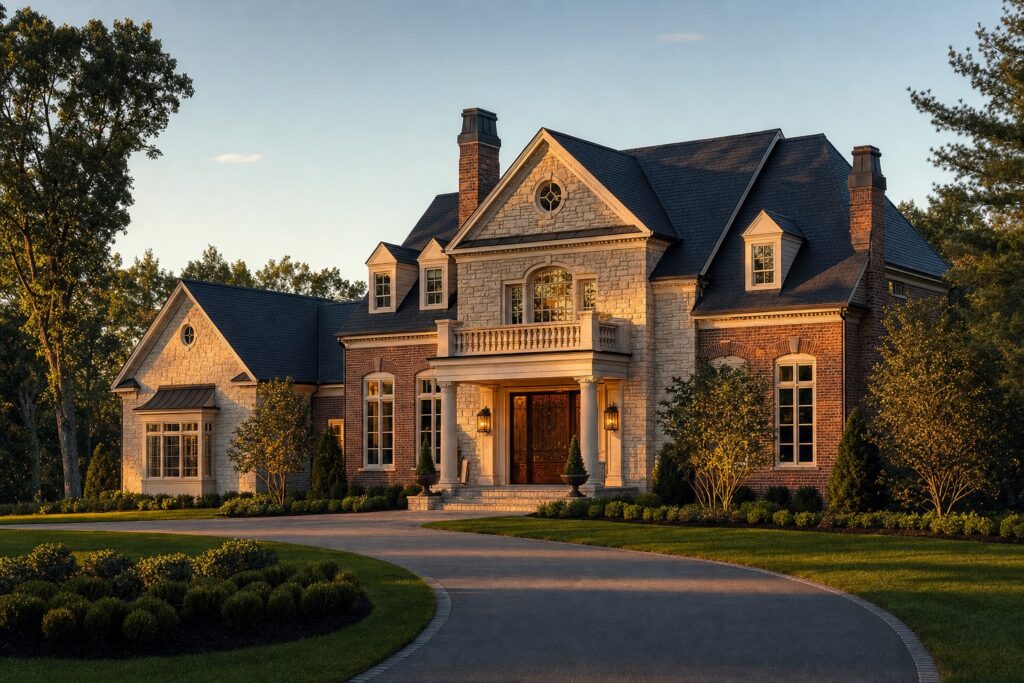
Luxury home remodeling in Northern Virginia typically runs $500 to $1,000 or more per square foot in 2026, with whole-home estate renovations most often landing between $750,000 and $3 million or more depending on scope, finishes, and the home’s size. At this level you are not buying drywall and paint; you are commissioning custom millwork, chef’s kitchens with professional appliances, spa-grade primary suites, and the kind of integrated systems and craftsmanship that hold their value in markets like McLean, Great Falls, and the estate corridors of Loudoun and Fairfax. This guide explains what drives those numbers, how the high-end design-build process actually works, what timelines and trades are involved, and how to protect resale at the top of the market.
Table of Contents
Quick answer: what luxury home remodeling in Northern Virginia costs in 2026
A luxury or estate whole-home renovation in Northern Virginia costs $500 to $1,000+ per square foot in 2026, which puts most projects in the $750,000 to $3 million-plus range. A focused luxury renovation of a primary suite, kitchen, and a few key spaces can start around $400,000, while a full estate transformation with additions, structural changes, a wine room, a home theater, an elevator, and high-end landscape and outdoor living can exceed $4 million. The figure depends far more on the level of customization and the quality of materials and trades than on square footage alone. Below is a working framework for where the money goes and what each tier buys.
| Renovation tier | Typical cost per sq ft | Typical total (4,000-7,000 sq ft home) | What it includes |
|---|---|---|---|
| Entry luxury | $400-$550 | $400,000-$900,000 | High-end kitchen and primary suite, premium finishes, select millwork, partial systems upgrade |
| Full luxury | $550-$750 | $900,000-$1.8M | Whole-home refinish, custom cabinetry throughout, chef’s kitchen, spa baths, smart-home integration |
| Estate | $750-$1,000+ | $1.8M-$3M+ | Structural changes, additions, wine room, theater, elevator, full landscape and outdoor living, bespoke everything |
| Landmark / no-ceiling | $1,000+ | $3M-$5M+ | Architecturally significant homes, rare materials, imported stone, custom metalwork, full estate grounds |
What drives the cost of luxury home remodeling in Northern Virginia
The single biggest variable in luxury home remodeling in Northern Virginia is the depth of customization. A $700,000 renovation and a $2.5 million renovation can cover the same square footage; the difference is whether every cabinet, casing, and stair part is shop-built to the home’s proportions or pulled from a catalog. Below are the cost drivers that separate a high-end project from an ordinary remodel, in roughly the order they move a budget.
Custom millwork and cabinetry
Custom millwork is the signature of an estate-level home and one of the largest line items after structure. We are talking about paint-grade and stain-grade cabinetry built to fit each opening, coffered and beamed ceilings, wainscoting and raised-panel walls, custom stair systems, and built-in libraries and bars. Shop-built cabinetry from a dedicated joinery shop typically costs three to five times the price of semi-custom boxes, and the labor to install and finish it on site is substantial. In Northern Virginia’s older McLean and Great Falls homes, millwork also has to be matched to existing period detail, which adds design and fabrication time. This is the work that most clearly reads as luxury and most reliably holds value.
Chef’s kitchens and professional appliances
A true chef’s kitchen at this level pairs custom cabinetry with professional-grade appliances, often a 48-inch or 60-inch range, dual dishwashers, integrated refrigeration columns, a separate prep kitchen or scullery, and natural stone slabs selected by hand. The appliance package alone routinely runs $60,000 to $150,000 before installation. Stone fabrication, full-height backsplashes, custom hoods, and specialty plumbing fixtures push the kitchen to one of the most expensive rooms per square foot in the entire home. Because the kitchen anchors both daily life and resale, it is the room where over-investing is least risky, provided the design is timeless rather than trend-driven.
Luxe primary suites and spa baths
An estate primary suite is effectively a private wing: a bedroom, a sitting area, dual custom closets, and a spa bath with a freestanding tub, a curbless wet room, heated floors, steam, and book-matched stone. The spa bath is plumbing-, tile-, and stone-intensive, and the labor to set large-format slabs and waterproof a wet room correctly is specialized. Heated floors, towel warmers, and smart shower systems add mechanical complexity. Done well, a luxe primary suite is one of the strongest value-holding investments in a luxury renovation because high-end buyers in McLean, Vienna, and Great Falls expect it and discount heavily when it is missing.
Smart-home integration and systems
Integrated lighting control, automated shades, multi-zone audio, security and camera systems, networking, and climate control are now baseline expectations in estate homes, not add-ons. A whole-home control system with the structured wiring, racks, and programming behind it commonly adds $75,000 to $250,000 depending on scope. Because this infrastructure lives inside walls and ceilings, it has to be designed before framing and finishes, which is one of the strongest arguments for a coordinated design-build process. Mechanical upgrades, high-efficiency HVAC with multiple zones, generators, and water treatment also fall in this category and quietly consume budget while making the home genuinely better to live in.
Wine rooms, theaters, elevators, and specialty spaces
Signature spaces are where estate budgets expand fastest. A climate-controlled wine room with custom racking, a dedicated home theater with acoustic treatment and tiered seating, a residential elevator, a fitness room, or a golf simulator each carries significant cost in equipment, structure, and finish. An elevator alone typically adds $75,000 to $150,000 once shaft, pit, and finish are accounted for, and it has real resale value as buyers plan to age in place. These rooms are also where discretion matters: the design has to feel integrated rather than bolted on, which is a craftsmanship and planning question as much as a budget one.
High-end landscape and outdoor living
At the estate level the grounds are part of the renovation, not an afterthought. Pools and spas, outdoor kitchens, covered loggias with fireplaces, stone terraces, motor courts, sport courts, lighting, and mature plantings can add $250,000 to well over $1 million on a Great Falls or Middleburg property. Northern Virginia’s clay soils, slope, and stormwater requirements make hardscape engineering more involved than it looks. Outdoor living is also one of the highest-return investments in this market because buyers at the top expect resort-grade exterior space and will pay for it.
The high-end design-build process for estate homes
Luxury home remodeling in Northern Virginia works best as a single, accountable design-build process rather than a design firm and a separate contractor handing drawings back and forth. When one team owns design, budgeting, and construction, the custom millwork, smart-home wiring, and structural changes are coordinated from the first sketch, which is exactly where estate projects succeed or fail. Here is how the process typically unfolds.
Discovery and feasibility
The first phase is understanding the home, the client, and the goals before any drawings are produced. We assess the existing structure, systems, and any historic or HOA constraints, then align on program, priorities, and a realistic budget range. For older estate homes in McLean and Great Falls, feasibility includes evaluating foundations, framing, and mechanical systems that may be decades old. This phase protects clients from the most common luxury-renovation mistake: committing to a design before anyone has confirmed the house and the budget can actually carry it.
Design development and selections
Next, the design matures from concept to fully detailed drawings, with millwork elevations, stone and tile selections, appliance specifications, and lighting and control layouts resolved on paper. At the luxury level, selections are not rushed at the end; they are integral to the design because a 60-inch range, a slab vault, or a particular cabinetry profile changes the architecture around it. This is also where the budget becomes a real, line-item number rather than an allowance-laden estimate, which is critical for keeping an estate project under control.
Pre-construction and procurement
Before demolition, long-lead items are ordered and the full schedule is built. Custom cabinetry, imported stone, specialty appliances, elevators, and control systems can carry lead times of three to six months or more, and ordering them early is the difference between a smooth project and an expensive stall. Permitting in Fairfax, Loudoun, and Arlington also happens here, and estate projects with additions or structural work face longer review timelines that need to be planned around, not discovered mid-build.
Construction and craftsmanship
Construction on an estate renovation is a long, carefully sequenced effort where the quality of the trades shows in every joint and reveal. The framing, mechanical rough-ins, and structured wiring all have to be right before finishes go in, and the finish trades, tile setters, stone fabricators, plaster and paint specialists, and finish carpenters, are where craftsmanship becomes visible. The best outcomes come from a stable roster of vetted trades who work together repeatedly, because coordination and accountability, not heroics, produce a flawless result.
Commissioning and closeout
The final phase is making sure everything works as intended and the client is genuinely supported afterward. Smart-home systems are programmed and tested, mechanical systems are balanced, punch-list items are closed, and the client is walked through how to operate the home. At the estate level, a serious builder also provides documentation, warranties, and a relationship for ongoing service, because a $2 million renovation deserves more than a handshake at the end.
Discretion, craftsmanship, and the client experience
At the top of the market, how a renovation is run matters as much as what gets built. Estate clients in Northern Virginia value discretion, communication, and a project that does not disrupt their lives more than necessary, and those are the things that separate a high-end builder from a merely competent one.
Discretion and privacy
Many estate clients in McLean, Great Falls, and Middleburg expect privacy as a baseline, both during the project and after. That means confidentiality about the home and its owners, careful management of trades and deliveries, secure handling of access, and a builder who treats the property and the family with respect. Discretion is not a luxury add-on at this level; it is part of the service, and clients notice immediately when it is missing.
Communication and project management
A seven-figure renovation needs structured, proactive communication: a single point of contact, regular updates, transparent budget tracking, and clear decision deadlines. The clients who have the best experiences are the ones who always know where the project stands and what is needed from them next. Good project management is also how a builder protects the budget and the schedule, because the expensive problems on estate projects almost always trace back to a decision that was made late or a change that was not priced before it happened.
Craftsmanship and the trades
Luxury is ultimately delivered by people. The plaster crew, the stone fabricator, the finish carpenter, and the painter are the ones who make a $1,000-per-square-foot home look like it. A builder is only as good as the trades it can reliably field, which is why the best estate work comes from firms with long-standing relationships with elite craftspeople rather than whoever is available. When you walk an estate home and the miters are tight, the reveals are consistent, and the stone is book-matched, you are seeing the trades, not the marketing.
Luxury home remodeling by Northern Virginia area
Northern Virginia is not one luxury market but several, each with its own housing stock, expectations, and renovation realities. Understanding the area shapes both the design and the budget for luxury home remodeling in Northern Virginia.
McLean and Great Falls
McLean and Great Falls are the heart of the region’s estate market, with large lots, significant existing homes, and buyers who expect the full luxury program. Renovations here frequently include structural additions, chef’s kitchens, spa primary suites, wine rooms, elevators, and resort-grade outdoor living, and total budgets commonly run from $1 million to well over $3 million. The high land values mean that investing heavily in the home is usually justified by the market, and under-improving an estate property in these zip codes is often the bigger financial risk.
Vienna, Oakton, and Fairfax
Vienna, Oakton, and the broader Fairfax area offer a strong move-up luxury market with a mix of established homes and newer construction. Luxury renovations here often focus on opening up floor plans, building true chef’s kitchens, adding luxe primary suites, and bringing systems up to current standards, with budgets frequently in the $500,000 to $1.5 million range. Resale is healthy and discerning, so timeless design and quality finishes return more reliably than highly personal, trend-driven choices.
Arlington and Alexandria
Arlington and Alexandria combine high land values with smaller, often historic lots, which makes renovation rather than teardown the dominant path to a luxury home. Projects here frequently involve working within tighter footprints, navigating historic districts and design review, and maximizing every square foot with custom built-ins and refined detailing. Budgets are substantial because the market supports them, and the premium on walkable, close-in luxury means a well-executed renovation in Arlington or Old Town Alexandria can hold value exceptionally well.
Loudoun County
Loudoun County spans suburban luxury in Ashburn and Leesburg and true estate and equestrian properties further into the Piedmont. Renovations range from high-end updates of newer luxury homes to comprehensive transformations of country estates with barns, outbuildings, and significant grounds. The county’s growth and strong schools support luxury investment, and estate properties toward Middleburg and the western county command the full $750-to-$1,000-plus-per-square-foot treatment.
Prince William County
Prince William County, including Gainesville, Haymarket, and Bristow, offers larger lots and strong value, with a growing luxury segment in communities like the area around Haymarket and the Piedmont edge. Luxury renovations here often deliver more square footage and grounds per dollar than the close-in counties, making them attractive for clients who want estate-scale outdoor living, custom kitchens, and finished lower levels. As Valor Builder is based in Bristow, this is home territory, and the local knowledge of soils, permitting, and trades is a real advantage.
How to control cost on a luxury renovation
Controlling cost on an estate renovation is not about cutting quality; it is about making expensive decisions early, deliberately, and once. The clients who stay on budget are the ones who treat planning as the place to spend their attention.
Lock the design before you build
The most expensive words on a luxury project are “can we change.” Every change made after framing or finishes ripples through coordinated systems, custom millwork, and the schedule, and changes priced mid-build almost always cost more than they would have at design. Investing the time to fully resolve drawings and selections before construction is the single most effective cost-control move available.
Prioritize where it counts
Not every room needs the same intensity. A disciplined budget concentrates spending where it shows and holds value, the kitchen, primary suite, key public rooms, and outdoor living, and is more restrained in secondary spaces. A good builder will help you allocate so that the home reads as cohesively luxurious without spending estate money on rooms that will never return it.
Buy long-lead items early
Schedule overruns are budget overruns because trades, supervision, and financing all cost money per month. Ordering custom cabinetry, stone, appliances, elevators, and control systems early protects the schedule and avoids the costly stalls that happen when a finished house is waiting on a single back-ordered component.
Timelines for estate renovations
Estate renovations take time, and rushing them is how quality suffers. A realistic timeline is itself a sign of a serious builder.
Design and pre-construction
For a full estate renovation, design, selections, and pre-construction typically take four to nine months before any demolition begins, longer if additions require structural engineering and lengthy permit review in Fairfax or Loudoun. This phase feels slow to clients eager to start, but it is where the project is actually won, and compressing it is the most common cause of cost overruns later.
Construction duration
Construction on a luxury whole-home renovation commonly runs nine to eighteen months, and large estate projects with additions, wine rooms, theaters, elevators, and full landscape can extend beyond two years. The finish trades, in particular, cannot be rushed without it showing. A credible schedule accounts for long-lead procurement, permit timelines, and the realities of coordinating elite trades, rather than promising a date that cannot survive contact with the work.
Protecting resale at the top of the market
At the estate level, protecting resale is about restraint and quality as much as investment. The goal is a home that the next high-end buyer in McLean, Great Falls, or Loudoun will value, not just one that suits the current owner’s tastes.
Timeless over trendy
Highly personal or trend-driven choices age fast and can actively reduce value to a future buyer. Classic millwork, natural materials, neutral architecture, and flexible spaces hold value far better than of-the-moment finishes. The most defensible luxury homes feel current for decades because they were never tied to a particular year’s trend.
Match the home to its market
Over-improving relative to the neighborhood is a real risk even at the top, though under-improving an estate property in McLean or Great Falls is usually the bigger one. The right level of investment is set by the home, the lot, and the surrounding market, and a builder who knows the local luxury comps can help you invest where the market will return it.
| Investment area | Typical luxury budget | Resale value retention | Notes |
|---|---|---|---|
| Chef’s kitchen | $200,000-$500,000 | High | Strongest day-to-day and resale return when timeless |
| Primary suite and spa bath | $150,000-$400,000 | High | Expected at this level; discounted heavily when missing |
| Outdoor living and landscape | $250,000-$1M+ | High | Resort-grade exteriors are expected on estate lots |
| Custom millwork throughout | $150,000-$600,000 | Medium-High | Reads as quality; holds value when classic |
| Home theater / wine room | $100,000-$300,000 | Medium | Valued by some buyers; integrate cleanly |
| Elevator | $75,000-$150,000 | Medium-High | Strong appeal for aging-in-place buyers |
How Valor Builder approaches your luxury and estate home renovation
Valor Builder is a Bristow-based design-build firm that handles luxury and estate renovations as a single accountable process, from discovery and design through procurement, construction, and closeout. Our luxury and estate home renovation services are built around the things that matter at this level: resolved drawings before construction, vetted elite trades, transparent budgets, discretion, and craftsmanship you can see in every reveal and miter. We work throughout Fairfax County, including McLean, Great Falls, Vienna, and Oakton, across Loudoun County from Ashburn and Leesburg to the Middleburg estate corridor, and in Arlington and Alexandria, as well as our home base in Prince William County. The goal is always the same: a home that lives beautifully, performs flawlessly, and protects its value at the top of the market.
Frequently asked questions
How much does luxury home remodeling in Northern Virginia cost in 2026?
Luxury and estate whole-home renovations in Northern Virginia run $500 to $1,000 or more per square foot in 2026, putting most projects between $750,000 and $3 million-plus. The exact figure depends on the level of customization, the quality of materials and trades, and whether the scope includes additions and specialty spaces. Customization, not square footage, is the biggest cost driver.
What counts as a luxury or estate renovation?
A luxury or estate renovation is defined by custom millwork, chef’s kitchens with professional appliances, spa-grade primary suites, smart-home integration, and often specialty spaces like wine rooms, theaters, and elevators. It is about bespoke design and elite craftsmanship rather than a fixed price point. The hallmark is that nearly everything is built to the home rather than pulled from a catalog.
Why is custom millwork so expensive?
Custom millwork is shop-built to fit each opening and finished on site by skilled carpenters, which costs three to five times the price of semi-custom cabinetry. It includes cabinetry, paneling, coffered ceilings, stair systems, and built-ins, all designed to the home’s proportions. It is also one of the clearest signals of quality and one of the most reliable holders of value.
How long does an estate renovation take?
Design and pre-construction typically take four to nine months, and construction commonly runs nine to eighteen months, with large estate projects extending beyond two years. Additions, structural work, and long-lead procurement all add time. A realistic schedule is a sign of a serious builder, while an unrealistically fast one usually signals trouble later.
What is a chef’s kitchen and what does it cost?
A chef’s kitchen pairs custom cabinetry with professional appliances such as a 48- or 60-inch range, integrated refrigeration, and often a separate prep kitchen or scullery. The appliance package alone commonly runs $60,000 to $150,000, and full kitchens at this level often total $200,000 to $500,000. It is one of the highest-value rooms for both daily life and resale.
Should I renovate or build new?
In high-value, close-in areas like McLean, Great Falls, Arlington, and Old Town Alexandria, renovating an existing estate home is often the better path because of land values, lot constraints, and historic character. Whether to renovate or rebuild depends on the home’s bones, your goals, and the market. A feasibility assessment early in the process answers this question with real numbers.
What is design-build and why does it matter for luxury homes?
Design-build means one accountable team owns design, budgeting, and construction rather than splitting them between a separate architect and contractor. For estate homes, this coordination is essential because custom millwork, structured wiring, and structural changes all have to be planned together. It also produces more reliable budgets and fewer expensive surprises during construction.
How do you control costs on a high-end renovation?
The most effective cost control is locking the design and all selections before construction begins, since changes made mid-build are far more expensive. Prioritizing spending where it shows and holds value, and ordering long-lead items early to protect the schedule, are the other two pillars. Expensive overruns almost always trace back to late decisions.
Do luxury renovations add resale value in Northern Virginia?
Yes, when the work is timeless and matched to the market. Chef’s kitchens, spa primary suites, and resort-grade outdoor living are expected at the estate level in McLean, Great Falls, and Loudoun, and homes that lack them are discounted. Trend-driven or overly personal choices, by contrast, can reduce value to a future buyer.
What areas does Valor Builder serve?
Valor Builder serves Fairfax County, including McLean, Great Falls, Vienna, and Oakton, Loudoun County from Ashburn and Leesburg through the Middleburg estate corridor, Arlington and Alexandria, and Prince William County, including Gainesville, Haymarket, and Bristow. The firm is based in Bristow, Virginia. It also serves the broader Virginia Piedmont.
How important is discretion on an estate project?
Discretion is a baseline expectation for many estate clients, not an add-on. It includes confidentiality about the home and its owners, careful management of trades and access, and respectful treatment of the property and family. Clients notice immediately when it is missing, and it is part of what distinguishes a high-end builder.
What specialty spaces are common in estate renovations?
Common specialty spaces include climate-controlled wine rooms, dedicated home theaters, residential elevators, fitness rooms, golf simulators, and finished lower levels. Each carries significant cost in equipment, structure, and finish, and an elevator alone often adds $75,000 to $150,000. The key is integrating them so they feel built-in rather than added on.
When should I start planning my renovation?
Because design and pre-construction for an estate project take four to nine months before demolition, the best time to start is well before you hope to begin construction. Early planning allows time for feasibility, fully resolved drawings, permitting, and ordering long-lead items. Starting early is also the most reliable way to protect both the budget and the schedule.
Plan your luxury and estate home renovation with confidence
A luxury or estate renovation is one of the largest investments you will make in your home, and it deserves a builder who treats planning, craftsmanship, and discretion with the seriousness they require. Whether your home is in McLean, Great Falls, Vienna, Arlington, Loudoun, or Prince William County, Valor Builder can help you define the right scope, build a real budget, and execute at the level the top of the market expects. Schedule a consultation with Valor Builder to start planning your luxury and estate home renovation with confidence.