

How Much Does a Deck Cost in Northern Virginia? (2026 Guide)
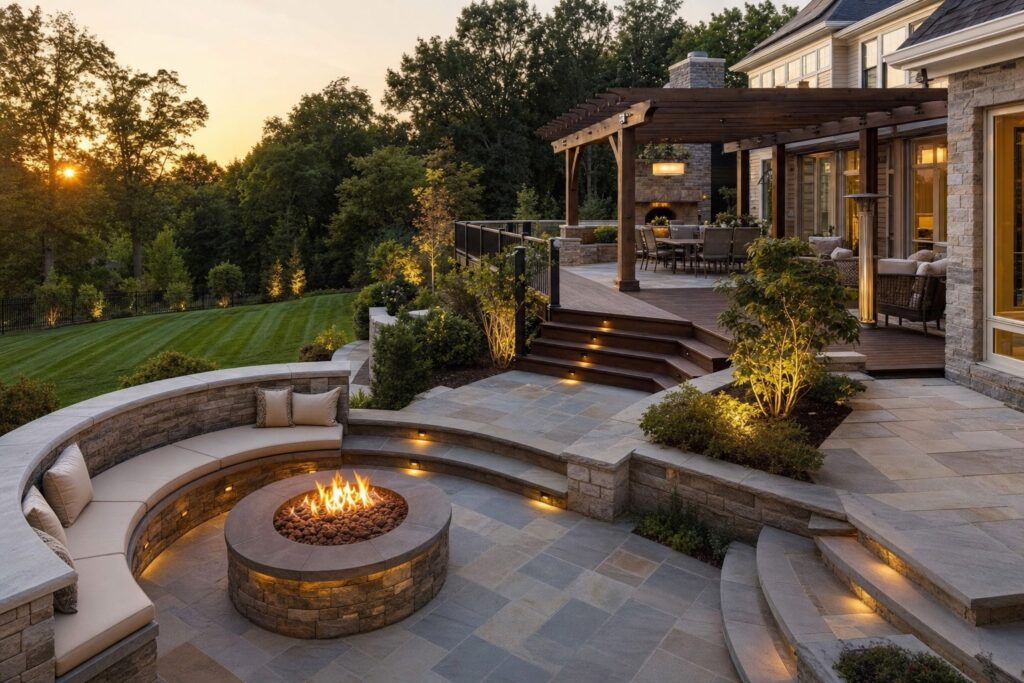
A deck in Northern Virginia typically costs between $15,000 and $45,000 in 2026, with large composite decks that include features running $40,000 to $90,000 or more. The deck cost in Northern Virginia depends mostly on size, material, height, railings, and finish work, plus a real regional labor premium that pushes prices above the national average across Fairfax, Loudoun, Prince William, and Arlington.
Building a deck is one of the most popular outdoor projects for homeowners across McLean, Vienna, Ashburn, and Gainesville, and it is also one of the most misunderstood when it comes to price. Two decks that look similar from the street can differ by tens of thousands of dollars once you account for the material, the height off the ground, the railing system, and the structural footings underneath. This guide breaks down what you should actually budget in 2026, why prices look the way they do in Northern Virginia specifically, and how to control cost without cutting the corners that matter for safety and longevity.
Table of Contents
Quick answer: deck cost in Northern Virginia (2026)
In 2026, most Northern Virginia homeowners pay $30 to $45 per square foot for a pressure-treated wood deck and $45 to $70 per square foot for a composite deck, with PVC and hardwood decks running higher. A typical project lands between $15,000 and $45,000, while a large composite deck with built-ins, lighting, and premium railings can reach $40,000 to $90,000 or more. The single biggest variable is material, followed closely by size and the structural complexity created by height and stairs. Below is a snapshot of where 2026 deck cost in Northern Virginia tends to fall by material and project scope so you can anchor your expectations before you ever call a builder.
| Material | Cost per sq ft (installed) | Typical 400 sq ft deck | Maintenance |
|---|---|---|---|
| Pressure-treated wood | $30 – $45 | $12,000 – $18,000 | Higher (stain/seal every 1-3 yrs) |
| Composite (capped) | $45 – $70 | $18,000 – $28,000 | Low (wash only) |
| PVC / cellular | $55 – $80 | $22,000 – $32,000 | Lowest |
| Hardwood (ipe, mahogany) | $60 – $90+ | $24,000 – $36,000+ | Moderate (oil periodically) |
What drives deck cost in Northern Virginia
Before you compare quotes, it helps to understand the levers that move the number. Deck cost in Northern Virginia is rarely about one thing; it is the sum of decisions about material, size, height, railings, and the work happening below the surface. When a homeowner in Oakton and a homeowner in Leesburg get wildly different prices for what sounds like the same deck, the gap almost always traces back to one or more of the drivers below. Understanding them puts you in a stronger position to read a proposal critically, ask the right questions, and decide where your money buys lasting value versus where it simply buys a bigger number on the invoice.
Size and square footage
Square footage is the foundation of any deck estimate because it scales nearly everything else: framing lumber, decking boards, fasteners, and labor hours. A compact 200-square-foot deck off a townhouse in Arlington behaves very differently on a spreadsheet than a sprawling 600-square-foot entertaining deck behind a Great Falls home. That said, cost per square foot is not perfectly linear. Small decks carry a higher per-foot cost because fixed expenses like mobilization, permits, and footings get spread across fewer feet. Very large decks can also climb in per-foot cost when they require additional beams, more footings, and multiple levels. The sweet spot for value is usually a mid-sized deck sized honestly to how you actually plan to use the space.
Material selection
Material is the largest single driver of deck cost in Northern Virginia. Pressure-treated pine remains the most affordable framing and decking option at $30 to $45 per square foot installed, but it demands ongoing staining and sealing. Composite decking, made from a wood-fiber and plastic blend with a protective cap, runs $45 to $70 per square foot and has become the most popular choice in the region because it resists fading, staining, and rot with almost no upkeep. PVC and cellular decking sit higher still, and tropical hardwoods like ipe occupy the premium tier. Your material choice ripples outward, influencing railing compatibility, fastener systems, and the long-term cost of ownership far beyond the initial install.
Height, stairs, and structure
What happens beneath the deck boards quietly drives a large share of the budget. A ground-level deck a step or two off the patio is dramatically cheaper than a second-story deck reaching off the back of a Haymarket colonial. As height increases, so do the size and number of support posts, the depth and quantity of concrete footings, the bracing requirements, and the railing footage. Stairs are deceptively expensive: each run requires stringers, treads, additional footings, and careful code-compliant rise-and-run geometry. A long staircase descending a sloped Loudoun County lot can add several thousand dollars on its own. Sloped or rocky sites also complicate excavation and footing placement, adding both labor and uncertainty to the structural portion of the job.
Railings and finishing systems
Railings are where aesthetics and budget collide. A basic pressure-treated wood railing is the most economical option, while powder-coated aluminum, cable rail, and glass panel systems carry a premium that can run $70 to $200 or more per linear foot installed. On a deck with a long perimeter, the railing alone can represent 15 to 25 percent of the total. Homeowners in McLean and Vienna often gravitate toward cable or metal railings for their clean sightlines and minimal maintenance, and those choices meaningfully raise the bottom line. Finishing touches such as fascia wrap, picture-frame border boards, and hidden fasteners also refine the look while adding labor and material to the final figure.
Permits and the Northern Virginia labor premium
Northern Virginia carries one of the higher cost-of-labor markets in the Mid-Atlantic, and skilled deck carpentry reflects that. Demand from Fairfax, Loudoun, Prince William, and Arlington keeps reputable crews busy, and that premium shows up in every quote. Permits are also non-negotiable for most decks: each county requires drawings, plan review, and inspections of footings, framing, and final construction. Permit fees, engineered drawings when required, and the labor to schedule and pass inspections all factor into a legitimate estimate. A quote that ignores permits is not cheaper; it simply hides a liability that can surface at resale or trigger enforcement from the county.
Deck materials compared for Northern Virginia climate
Northern Virginia weather is hard on outdoor structures. Humid summers, freeze-thaw winters, and heavy spring rain all test how a deck holds up over a decade or two. The right material is the one that matches your tolerance for maintenance, your budget, and how long you plan to stay in the home. Below, each major option is weighed against the local climate and the realities of ownership in Fairfax, Arlington, and the surrounding counties so you can choose with your eyes open rather than chasing the lowest sticker price and paying for it later in upkeep or premature replacement.
Pressure-treated wood
Pressure-treated lumber is the workhorse of the deck world and the most budget-friendly path to a finished deck at $30 to $45 per square foot installed. It is strong, widely available, and easy for any qualified crew to work with. The trade-off is maintenance: in Northern Virginia’s humid climate, wood decks need cleaning and a fresh coat of stain or sealer every one to three years to prevent cracking, warping, and graying. Skip that upkeep and the deck ages quickly. For homeowners who do not mind weekend maintenance or who want the lowest entry price, pressure-treated wood remains a sensible choice, particularly for the structural framing even when a different decking surface sits on top.
Composite decking
Composite is the most popular decking choice across Northern Virginia in 2026, and for good reason. At $45 to $70 per square foot installed, it costs more upfront than wood but eliminates staining and sealing entirely; an occasional wash with soap and water is all it needs. Modern capped composites resist fading, scratching, and mold far better than earlier generations, and they come in convincing wood-grain tones. For a busy household in Ashburn or Gainesville that wants to enjoy the deck rather than maintain it, composite often delivers the best total value over a 15-to-25-year horizon. It pairs naturally with metal or cable railings and hidden fastener systems for a clean, modern finish.
PVC and cellular decking
PVC and cellular PVC decking sit a tier above composite at roughly $55 to $80 per square foot installed. Because they contain no wood fiber, they are the lightest and most resistant to moisture, making them well suited to shaded, damp areas or poolside decks where standing water is common. They carry the lowest maintenance burden of any decking material. The premium price keeps PVC from being the default choice, but for homeowners prioritizing absolute longevity and minimal upkeep, particularly in lower-lying or heavily shaded yards around Vienna and Oakton, it can be worth the added investment.
Hardwood and premium options
Tropical hardwoods such as ipe and mahogany represent the high end of natural decking, often $60 to $90 or more per square foot installed. They are extraordinarily dense, durable, and beautiful, with a richness that synthetic products only imitate. The trade-offs are cost, the specialized labor required to work with such hard material, and periodic oiling to preserve color. Hardwood decks make the most sense for design-forward homes in McLean and Great Falls where the architecture justifies a statement-grade material and the homeowner values authentic wood over the convenience of composite.
Deck cost by Northern Virginia area
Pricing is not uniform across the region. Lot characteristics, home style, design expectations, and local demand all shift the typical budget from one community to the next. The ranges below reflect how deck cost in Northern Virginia tends to vary by area in 2026, based on common project types and the kinds of materials and features homeowners in each market gravitate toward. Use them as directional guidance rather than fixed quotes; your specific site, design, and material choices will always be the final word on price.
McLean and Great Falls
McLean and Great Falls homeowners typically build at the upper end of the market. Larger lots, two-story decks off the rear of substantial homes, and a strong preference for composite or hardwood surfaces with cable or metal railings push projects here toward $35,000 to $90,000 and beyond. Sloped and wooded lots in Great Falls frequently require taller structures, more footings, and longer stair runs, all of which add cost. Design expectations also run high, with built-in seating, integrated lighting, and multi-level layouts common. For these homes, the deck is treated as a true architectural extension of the house rather than a simple platform.
Vienna, Oakton, and Fairfax
Across Vienna, Oakton, and the broader Fairfax area, decks tend to fall in the heart of the regional range. Mid-sized composite decks with quality railings commonly land between $20,000 and $45,000. These are established neighborhoods where homeowners often replace aging wood decks with low-maintenance composite, sometimes expanding the footprint or adding stairs and lighting in the process. Flat-to-moderate lots keep structural costs reasonable in many cases, though older homes occasionally require framing upgrades or ledger corrections that add to the budget. This market rewards thoughtful, well-built mid-tier projects over extravagance.
Arlington and Alexandria
Arlington and Alexandria are dominated by townhouses, smaller urban lots, and tighter access. Decks here are often more compact but not necessarily cheaper per square foot, because limited access complicates material delivery and the premium urban labor market adds cost. A typical Arlington deck might run $15,000 to $35,000, with rooftop and second-story decks at the higher end. Space constraints push designs toward efficiency, vertical features, and railings that preserve sightlines. Permitting in these denser jurisdictions can also be more involved, particularly where historic districts or close lot lines come into play.
Loudoun County (Ashburn and Leesburg)
Loudoun County, including Ashburn and Leesburg, features a large stock of newer homes well suited to deck additions and upgrades. Composite is overwhelmingly popular here, and typical projects range from $18,000 to $50,000 depending on size and features. Many Loudoun homes have walkout basements and sloped rear yards, which means taller decks with longer stairs and occasionally multi-level designs. The county’s active inspection process is thorough, and reputable builders price in the permitting and inspection time. Newer subdivisions often have HOA design guidelines that influence railing style and color choices.
Prince William County (Gainesville, Haymarket, Bristow)
In Prince William County, including Gainesville, Haymarket, and Bristow, deck cost in Northern Virginia tends to be slightly more approachable than the inner suburbs while still reflecting regional labor rates. Typical projects run $15,000 to $45,000, with composite decks the clear favorite for newer homes. Many properties here have generous rear yards that invite larger footprints, multi-level layouts, and outdoor living features. As Valor Builder’ home county, Bristow and its surrounding communities are where a great deal of our deck work happens, and the combination of newer construction and family-oriented outdoor living makes it a strong market for thoughtful composite builds.
Sample deck budgets for 2026
Abstract per-square-foot figures only go so far. To make the numbers concrete, here are three representative deck projects at different scopes, each reflecting realistic 2026 Northern Virginia pricing including materials, labor, footings, railings, and permits. These examples are illustrative and will shift with your exact site and selections, but they show how the pieces add up and where the money tends to concentrate. Notice how railings, height, and finish features, not just raw size, drive the jump from one tier to the next.
| Project | Size | Material | Key features | Estimated cost |
|---|---|---|---|---|
| Entry-level | 250 sq ft | Pressure-treated wood | Low height, wood railing, short stairs | $15,000 – $20,000 |
| Mid-range | 400 sq ft | Composite | Second-story, metal railing, lighting | $28,000 – $45,000 |
| Premium | 600 sq ft | Composite / PVC | Multi-level, cable rail, built-ins, lighting | $55,000 – $90,000+ |
Where the budget actually goes
On a typical mid-range composite deck, decking material and framing lumber together account for a large share of cost, followed by labor, then railings, then footings and structural work, with permits and finishing features rounding out the total. Railings deserve special attention because they often surprise homeowners; upgrading from wood to cable or metal can add several thousand dollars to an otherwise modest deck. Lighting, built-in benches, and pergolas are genuinely nice but are squarely discretionary, so they are the easiest places to adjust if your numbers need to come down. Understanding this distribution helps you spend where it counts and trim where it does not hurt.
How to control your deck cost
A great deck does not require an unlimited budget; it requires good decisions made in the right order. The homeowners who get the most value are the ones who prioritize structure and material quality first, then make clear-eyed choices about the features that are easy to add now but costly to change later. The strategies below help you manage deck cost in Northern Virginia without compromising the elements that determine whether your deck lasts five years or twenty-five. None of them involve cutting safety corners, which always costs more in the end through repairs, failed inspections, or liability.
Choose the right material for the right reason
The wood-versus-composite decision is the biggest lever you control. If you plan to stay in your home long term and value weekends free of maintenance, composite usually wins on total cost of ownership despite the higher upfront price. If budget is tight or you are building on a property you may sell soon, pressure-treated wood can make sense. A common middle path is composite decking on a pressure-treated frame, which delivers a low-maintenance surface at a more moderate price than full PVC or hardwood. Match the material to your real timeline and habits rather than to a showroom impulse.
Right-size the footprint
Bigger is not automatically better. An honestly sized deck that fits how you actually entertain costs less to build, less to maintain, and less to heat or cool the adjacent rooms. Before committing to a sprawling layout, think through your real usage: a table for six, a grill zone, and a lounge corner may need far less square footage than you imagine. Trimming even 100 square feet from an oversized plan can save thousands while making the finished space feel more intentional and proportionate to the home.
Prioritize structure, then finishes
Spend first on the things that are hard or impossible to change later: proper footings, correctly sized framing, quality ledger attachment, and code-compliant stairs. These are invisible but essential, and they determine the deck’s safety and lifespan. Decorative features like lighting, pergolas, and built-in seating can often be added in a later phase once the core deck is in place. Sequencing your spending this way lets you build a sound deck now and layer in the extras as budget allows, rather than skimping on structure to afford features.
Get detailed, comparable quotes
The cheapest quote is rarely the best value, and an apples-to-oranges comparison can cost you dearly. Insist on itemized proposals that spell out material brand and grade, framing specifications, railing type, footing details, permit handling, and warranty. A thorough builder will document these clearly; a vague one-line bid often signals corners being cut or surprises waiting in the wings. Comparing quotes line by line reveals the true difference between bids and protects you from the false economy of a low number that omits permits or uses lighter framing.
Deck project timeline in Northern Virginia
Homeowners are often surprised that the build itself is only part of the calendar. Between design, permitting, material lead times, and inspections, a deck project typically spans several weeks from first consultation to final sign-off. Understanding the timeline helps you plan around summer entertaining season and set realistic expectations. The phases below reflect a typical Northern Virginia project, though permitting speed varies by county and material availability can shift with demand, especially heading into the busy spring and summer building months when crews and inspectors are in highest demand.
Design and estimating
The process starts with a consultation, site assessment, and design conversation. Your builder evaluates the home’s structure, the yard’s grade, access, and your goals, then develops a design and detailed estimate. This phase can take one to three weeks depending on complexity and how quickly material and railing selections are finalized. Investing time here pays off, because a well-developed design prevents costly changes once construction begins and ensures the permit drawings reflect exactly what you want.
Permitting and approvals
Once the design is set, permit drawings are submitted to the county for review. Fairfax, Loudoun, Prince William, and Arlington each have their own process and timelines, and approval can take anywhere from a few days to several weeks. HOA approval, where required, runs in parallel and can add time. This phase is largely out of the builder’s hands, but an experienced local team knows each jurisdiction’s expectations and submits complete packages the first time to avoid rejections and resubmittals that stretch the calendar.
Construction and inspection
With permits in hand, construction usually takes one to three weeks for a typical deck, longer for large multi-level projects. Footings are dug and poured first and inspected before framing proceeds. The frame goes up and is inspected, then decking, railings, stairs, and finishing features are installed, followed by a final inspection. Weather can affect the schedule, particularly during wet spring weeks. A well-run crew sequences inspections efficiently so the project moves steadily from poured footings to a finished, signed-off deck ready to enjoy.
Deck value and return on investment
A deck is one of the better outdoor investments a Northern Virginia homeowner can make, both in daily enjoyment and at resale. Well-built decks consistently recover a meaningful share of their cost when a home sells, and they expand usable living space at a fraction of the cost of an enclosed addition. Beyond the resale math, a deck changes how a household lives, turning an unused backyard into a place for meals, gatherings, and quiet mornings. The sections below put the value question in perspective so you can weigh the spend against both financial and lifestyle returns.
Resale impact
In Northern Virginia’s competitive housing market, a quality deck is a genuine selling point. Buyers across Fairfax, Loudoun, and Prince William increasingly expect functional outdoor living space, and a well-maintained composite deck signals a cared-for home. While exact recovery varies, decks reliably rank among the home improvements with stronger cost recovery, and a low-maintenance composite deck in good condition removes a common buyer objection. A neglected or non-permitted deck, by contrast, can become a negotiation liability, which is one more reason to build it right and keep the paperwork clean.
Lifestyle value
The financial return tells only half the story. The everyday value of a deck, an outdoor dining space, a spot for morning coffee, room for kids and guests, is what most homeowners actually remember. In a region with genuinely pleasant spring and fall seasons, a deck extends the livable footprint of the home for much of the year. That daily utility, hard to quantify on a spreadsheet, is often the real reason a deck proves to be money well spent long before the home is ever listed for sale.
What to watch for when hiring
Not every quote or contractor is created equal, and the deck market attracts its share of corner-cutters. Protecting yourself starts with knowing the warning signs and the questions that separate a professional design-build team from a casual operator. The points below help you vet builders and proposals so your investment results in a safe, durable, code-compliant deck rather than a problem you inherit. A little diligence at the hiring stage prevents the far larger costs and headaches of repairs, failed inspections, or rework down the road.
Permits and licensing
Always confirm that your builder pulls proper permits and carries Virginia contractor licensing and insurance. A contractor who suggests skipping the permit to save money is creating a liability that becomes yours, surfacing at resale or during a future inspection. Legitimate permits mean the county verifies footings, framing, and final construction meet code. Licensing and insurance protect you if something goes wrong on the job. These are non-negotiable baseline requirements, not optional extras, and any reluctance around them is a serious red flag.
Structural shortcuts
The most dangerous shortcuts are the ones you cannot see. Undersized footings, improper ledger attachment to the house, and lighter-than-spec framing are common ways to shave cost at the expense of safety and longevity. Deck failures, when they happen, almost always trace back to these hidden elements. Insist that your proposal specifies footing depth and diameter, framing dimensions, and how the deck attaches to the home. A reputable builder welcomes these questions; an evasive one should give you pause.
Vague contracts
A trustworthy deck contract reads clearly and leaves little to interpretation. It should name the material brands and grades, specify railing and fastener systems, lay out the payment schedule, define the warranty, and clarify who handles permits and inspections. Vague contracts invite disputes and surprise charges. Before signing, make sure the document reflects every detail you discussed, so the deck you receive matches the deck you agreed to and paid for.
How Valor Builder approaches your deck
At Valor Builder, we treat a deck as a real piece of construction, not a weekend add-on. As a design-build custom home builder and remodeler based in Bristow, we bring the same structural rigor and finish quality to a deck that we bring to a full renovation. Our deck services start with an honest consultation about how you will use the space, your timeline in the home, and your budget, so we can recommend the right material and design rather than the most expensive one. We handle permitting and inspections in Fairfax County, Loudoun County, Arlington, and Prince William County, and we build to last with properly sized footings, correct ledger attachment, and code-compliant stairs and railings. You get a clear, itemized proposal, a realistic schedule, and a deck engineered for Northern Virginia’s climate from the framing up.
Frequently asked questions
How much does a deck cost in Northern Virginia in 2026?
Most decks in Northern Virginia cost between $15,000 and $45,000 in 2026, with large composite decks that include features running $40,000 to $90,000 or more. Pressure-treated wood runs $30 to $45 per square foot installed, while composite runs $45 to $70. Your final price depends on size, material, height, railings, and finish features.
Is composite or wood cheaper for a deck?
Pressure-treated wood is cheaper upfront at $30 to $45 per square foot, compared to $45 to $70 for composite. However, composite eliminates ongoing staining and sealing, so over a 15-to-25-year period it often costs less to own. The right choice depends on your budget and how long you plan to stay in the home.
Why are decks more expensive in Northern Virginia?
Northern Virginia has one of the higher labor markets in the Mid-Atlantic, and strong demand across Fairfax, Loudoun, Prince William, and Arlington keeps skilled crews busy. Permit requirements, engineered drawings on some projects, and the region’s higher cost of doing business all add to the price. These factors push local deck costs above the national average.
Do I need a permit to build a deck in Northern Virginia?
Yes, most decks require a permit in Fairfax, Loudoun, Prince William, and Arlington counties. The county reviews drawings and inspects footings, framing, and final construction to confirm the deck meets code. A contractor who suggests skipping the permit is creating a liability that becomes yours at resale or future inspection.
How much does a composite deck cost in Northern Virginia?
Composite decks run $45 to $70 per square foot installed in 2026, so a 400-square-foot deck typically costs $18,000 to $28,000 for the surface and framing. Adding second-story height, metal or cable railings, lighting, and built-ins can push a larger composite deck to $40,000 to $90,000 or more. Composite is the most popular choice in the region for its low maintenance.
What is the most expensive part of building a deck?
Material and framing together usually represent the largest share, followed by labor and railings. Railings often surprise homeowners, since upgrading from wood to cable or metal can add several thousand dollars. Height and stairs also drive significant cost because they require more footings, posts, and structural support.
How long does it take to build a deck?
Construction typically takes one to three weeks for a standard deck, longer for large or multi-level projects. Including design, permitting, and inspections, the full timeline from consultation to sign-off usually spans several weeks. Permit review times vary by county and weather can affect the construction schedule.
Does a deck add value to my home?
Yes, decks consistently rank among the home improvements with stronger cost recovery at resale. In Northern Virginia’s competitive market, a well-maintained composite deck signals a cared-for home and meets buyer expectations for outdoor living space. Beyond resale, the daily lifestyle value of usable outdoor space is significant.
How much does a second-story deck cost?
Second-story decks cost more than ground-level decks because they require taller posts, deeper footings, additional bracing, and longer stair runs. A second-story composite deck commonly lands in the $28,000 to $50,000 range or higher depending on size and features. The added structure and railing footage are the main reasons for the premium.
What deck material lasts longest in Virginia’s climate?
PVC and capped composite decking hold up best against Northern Virginia’s humidity, freeze-thaw cycles, and heavy rain, since they resist rot, mold, and fading. Tropical hardwoods like ipe are also extremely durable but require periodic oiling. Pressure-treated wood lasts well too but only with regular staining and sealing.
Can I add lighting and built-ins later?
Yes, features like lighting, built-in benches, and pergolas can often be added in a later phase after the core deck is built. Prioritizing structure first lets you build a sound deck now and layer in extras as budget allows. Discuss future plans with your builder so wiring or framing can be roughed in if helpful.
How do I know if a deck quote is fair?
Insist on an itemized proposal that specifies material brand and grade, framing details, railing type, footing specifications, permit handling, and warranty. Compare quotes line by line rather than by bottom-line price alone. The cheapest bid is rarely the best value, and a vague one-line quote often hides corners being cut.
Does Valor Builder handle permits and inspections?
Yes, Valor Builder manages permitting and inspections across Fairfax, Loudoun, Prince William, and Arlington counties as part of every deck project. We know each jurisdiction’s requirements and submit complete packages to avoid delays. This ensures your deck is built to code and properly documented for resale.
Plan your deck with confidence
A deck is a meaningful investment, and the right partner makes all the difference between a structure that lasts decades and one that becomes a headache. If you are weighing materials, sizing a layout, or simply trying to understand what your project should cost, the Valor Builder team is ready to give you honest guidance grounded in real Northern Virginia experience. Schedule a consultation with Valor Builder today, and let us help you design a deck that fits your home, your budget, and the way your family actually lives outdoors.