

How to Choose a Custom Home Builder in Northern Virginia (2026 Guide)
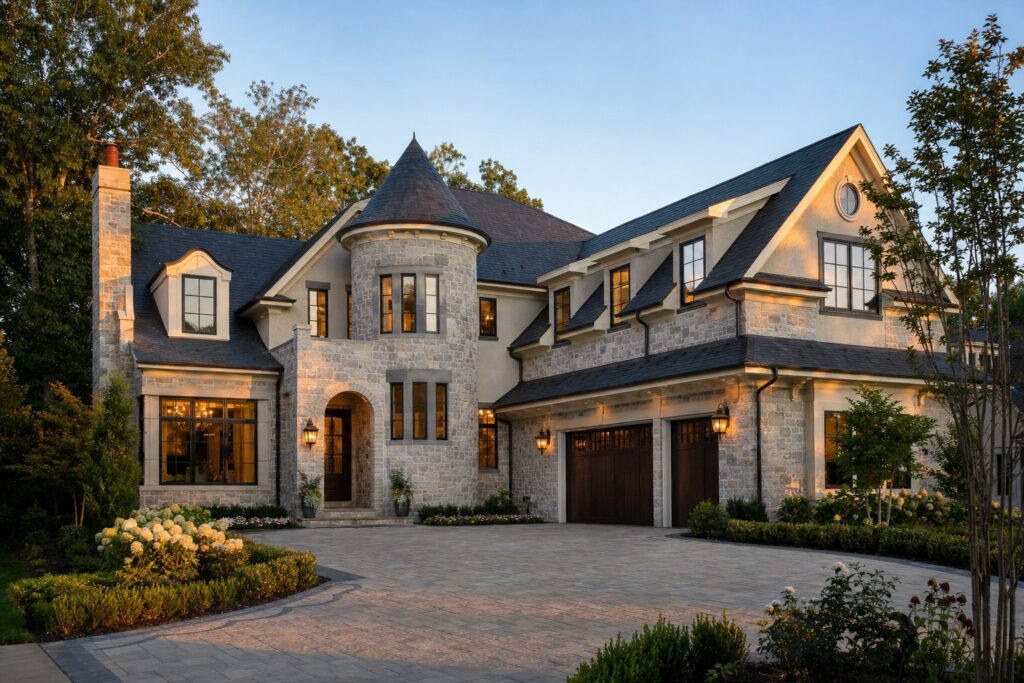
To choose a custom home builder in Northern Virginia, verify the company holds an active Virginia Class A contractor license and carries general liability and workers’ compensation insurance, then confirm it has a portfolio of completed homes, references you can actually call, and a clear written contract before you sign anything. The best fit is usually a design-build firm with proven local permitting experience in your county, transparent pricing, and a communication system you can live with through a 10 to 18 month project. In Northern Virginia, custom homes typically run $350 to $600 or more per square foot, so the builder you pick controls hundreds of thousands of dollars and a year-plus of your life.
Table of Contents
Quick answer: how to choose a custom home builder in Northern Virginia
The right custom home builder in Northern Virginia is licensed (Virginia Class A), fully insured, financially stable, and able to show you finished homes and references in your county. Prioritize a design-build firm with a fixed-price or clearly structured contract, documented permitting experience in Fairfax, Loudoun, Prince William, Arlington, or Alexandria, and a project manager who communicates in writing every week. Expect to budget $350 to $600 or more per square foot, and treat lowball bids, vague scopes of work, and high-pressure sales tactics as disqualifying red flags. The table below summarizes what to check before you sign.
| What to verify | Why it matters | How to confirm it |
|---|---|---|
| Virginia Class A license | Required for projects over $120,000; signals capacity and bonding | Search the DPOR license lookup by company name |
| Liability + workers’ comp insurance | Protects you from job-site injury and damage claims | Request a certificate of insurance naming you |
| Completed local portfolio | Proves they can deliver in your style and price range | Tour finished homes; review photos and addresses |
| Callable references | Reveals real communication and warranty behavior | Call 3 recent clients and 1 from two years ago |
| Written, detailed contract | Defines price, scope, schedule, and allowances | Read every line before signing; no verbal promises |
| County permitting experience | Avoids costly delays with local plan review | Ask how many permits they pulled in your county last year |
Start by verifying licensing and insurance
Before you fall in love with a builder’s portfolio, confirm the fundamentals that protect your money and your property. A custom home builder in Northern Virginia working on a project worth more than $120,000 must hold a Virginia Class A contractor license issued by the Department of Professional and Occupational Regulation (DPOR). That license is not a formality; it requires the company to demonstrate financial capacity, pass a licensing exam, and maintain a designated employee with verified experience. Beyond the license, the builder must carry adequate general liability insurance and workers’ compensation coverage for every person on your job site. If you skip this step and a framer is injured on an uninsured job, the liability can land on you as the property owner. Verification takes ten minutes and saves you from the most expensive mistakes.
Confirm the Virginia Class A contractor license
Virginia tiers contractor licenses by project value. A Class C license covers work up to $10,000, Class B covers up to $120,000, and a Class A license carries no monetary limit, which is what a true custom home requires. Use the DPOR online license lookup to search the company name and confirm the license is active, not expired or revoked, and that it includes the proper specialty designations such as Building (BLD) or Residential Building Energy (RBC). Also confirm the license has been held for several years rather than freshly issued, because longevity correlates with stability. A builder who hesitates to give you their license number, or whose number does not match a clean DPOR record, has told you everything you need to know.
Check insurance certificates and bonding
Ask for a certificate of insurance issued directly from the builder’s insurance agent, not a photocopy the builder hands you. The certificate should show general liability coverage of at least $1 million per occurrence and active workers’ compensation coverage. Request that you be listed as a certificate holder so you are notified if coverage lapses mid-project. For larger builds, ask whether the project will be bonded; a performance bond guarantees the work is completed even if the builder fails financially. While Virginia does not require residential bonding on every job, a builder’s ability to obtain bonding is itself a signal of financial health that a thinly capitalized operator cannot fake.
Verify financial stability and longevity
A custom home ties up your money for a year or more, often through a construction loan with draw schedules. If your builder runs out of cash halfway through framing, you inherit a stalled job and a half-finished house. Ask how long the company has operated under its current name, request recent bank or supplier references, and look for signs of stability such as long-tenured staff and established relationships with local lumberyards and subcontractors. Builders who churn through trade partners or change business names frequently raise legitimate concern. A financially sound custom home builder in Northern Virginia can weather material price swings and seasonal slowdowns without passing the stress on to your project.
Evaluate the portfolio, references, and reputation
Licensing tells you a builder is allowed to work; the portfolio and references tell you whether they work well. The strongest evidence a custom home builder can offer is a body of finished homes you can see and owners you can call. Photographs are a start, but they are curated and sometimes purchased. What you want is the ability to walk a completed home, speak with the family who lives there, and hear how the builder handled the inevitable problems that arise in any twelve-month construction project. Reputation in Northern Virginia is small-world; the same builders’ names circulate among neighbors in McLean, Vienna, and Great Falls. Spend the time here, because no contract clause substitutes for a track record of people who would hire the builder again.
Tour completed homes in person
Ask to visit at least two finished homes, ideally in a price range and architectural style close to yours. Walking the home reveals craftsmanship that photos hide: the alignment of trim, the feel of the cabinetry hardware, the quality of the tile transitions, and whether finishes have held up over a couple of years. Pay attention to the details owners did not request changes to, because those reflect the builder’s default standard. If a builder cannot produce a single completed custom home to tour in Northern Virginia, treat that as a serious gap, regardless of how polished their marketing looks.
Call real references, including older ones
Any builder can hand you three glowing references. Insist on speaking with clients from the last six months and at least one from two or three years ago. Recent clients tell you about current crews and communication; older clients tell you about warranty follow-through, how the home aged, and whether the builder returned calls after the final payment cleared. Ask each reference direct questions: Did the project finish on budget and on schedule? How were change orders handled? Would you hire them again? The willingness of a past client to spend fifteen minutes on the phone is itself a strong endorsement.
Read third-party reviews critically
Online reviews on Google, Houzz, and the Better Business Bureau add useful texture, but read them for patterns rather than individual scores. A handful of negative reviews is normal across a decade of building; what matters is how the builder responded and whether complaints cluster around the same issue, such as missed deadlines or poor communication. Cross-reference reviews against the references you call. Be skeptical of a builder with dozens of five-star reviews all posted within a short window, which can indicate solicited or fabricated feedback rather than a genuine reputation built over years of work in the region.
Design-build versus separate architect and general contractor
One of the biggest structural decisions you make is how to assemble your project team. The two dominant models in Northern Virginia are design-build, where a single firm handles design and construction under one contract, and the traditional design-bid-build, where you hire an architect to produce plans and then competitively bid those plans to general contractors. Each model has real advantages and real trade-offs, and the right choice depends on how much control you want, how much risk you can tolerate, and how much you value a single point of accountability. Understanding the difference before you start interviews lets you ask sharper questions and avoid the finger-pointing that derails projects when design and construction sit in separate contracts.
How design-build works
In a design-build arrangement, one firm owns both the architectural design and the construction. This gives you a single point of accountability: if a detail is unbuildable or over budget, there is no gap between designer and builder to argue across. Design-build firms typically price as they design, so cost surprises surface early when they are cheap to fix rather than after permitting when they are expensive. The model tends to compress the schedule because construction planning begins before drawings are fully complete. The trade-off is that you place significant trust in one company, which makes the vetting in this guide even more important.
How separate architect and GC works
The traditional path hires an independent architect first, who designs your home without any obligation to a particular builder, then takes the completed plans out to bid among general contractors. The advantage is design independence and competitive construction pricing on identical plans. The disadvantages are a longer overall timeline, a coordination burden that often falls on you, and a structural seam where the architect blames the builder for cost overruns and the builder blames the architect for impractical drawings. This model can work beautifully for owners who want maximum design control and have the patience to manage two contracts and the gap between them.
Which model fits your project
Choose design-build if you value speed, a single accountable partner, and early cost certainty, which describes most custom home clients in Fairfax and Loudoun who want a smooth process. Choose the separate-architect path if architectural distinction is your top priority, you have a strong independent architect in mind, and you are comfortable managing the coordination. Many Northern Virginia families land on design-build precisely because it removes the adversarial seam and keeps one company responsible from the first sketch through the final warranty visit. Whichever model you choose, the licensing, insurance, and reference checks remain identical.
Understand contract types and what they mean for your budget
The contract structure determines who carries the risk of cost overruns and how much pricing certainty you get. The three common structures in custom home building are fixed-price, cost-plus, and allowance-based contracts, and each shifts risk differently between you and the builder. Many real-world contracts blend elements, such as a fixed price with specified allowances for finishes you have not yet selected. Reading and understanding your contract is not optional; it is the single document that governs how disputes get resolved when, not if, something unexpected happens. The table below lays out the three structures so you can match the contract to your tolerance for risk and your need for budget predictability.
| Contract type | How pricing works | Who carries overrun risk | Best for |
|---|---|---|---|
| Fixed-price (lump sum) | One agreed price for a fully defined scope | Builder absorbs overruns within scope | Owners who want budget certainty and complete plans |
| Cost-plus | Actual costs plus a fixed fee or percentage | Owner carries most overrun risk | Highly custom builds with evolving scope and high trust |
| Allowance-based | Set dollar allowances for undecided finishes | Owner pays difference if selections exceed allowance | Projects starting before all finishes are chosen |
Fixed-price contracts
A fixed-price or lump-sum contract gives you a single number for a fully defined scope of work. This is the most predictable structure for your budget because the builder absorbs cost overruns that fall within the agreed scope, which incentivizes accurate upfront pricing and efficient management. The catch is that fixed-price only works when the plans and specifications are genuinely complete; vague drawings force the builder to pad the price for unknowns or to rely heavily on change orders. For most Northern Virginia custom home clients who value certainty and have finalized their design, a well-written fixed-price contract is the safest structure available.
Cost-plus contracts
In a cost-plus contract, you pay the actual cost of labor and materials plus the builder’s fee, charged either as a fixed amount or a percentage of costs. This structure offers transparency into every expense and suits highly custom projects where the scope genuinely cannot be pinned down in advance. The risk is that you, not the builder, absorb overruns, and a percentage-based fee gives the builder little incentive to economize. If you choose cost-plus, insist on a guaranteed maximum price (GMP) cap, open-book accounting you can audit, and a fixed fee rather than a percentage to keep the builder’s interests aligned with yours.
Allowance-based contracts and hidden traps
Allowances are dollar figures the contract sets aside for items you have not yet selected, such as flooring, plumbing fixtures, or countertops. They let a project start before every finish is chosen, but they are also where budgets quietly explode. A builder can win a bid by setting unrealistically low allowances, then bill you the overage once you make real selections. Before signing, scrutinize every allowance against actual showroom pricing in Northern Virginia, and ask the builder to walk you through a realistic finish package. Reasonable, well-documented allowances signal honesty; suspiciously low ones signal a lowball bid designed to be made up later.
Assess communication, project management, and warranty
A custom home is a relationship that lasts a year or longer, and the quality of that relationship is decided by communication systems and project management discipline. The most common source of homeowner regret is not craftsmanship but poor communication: unreturned calls, surprise delays, and change orders sprung without explanation. Before you sign, understand exactly how the builder will keep you informed, who your single point of contact will be, and what happens when something goes wrong after you move in. A builder with a clear weekly reporting rhythm, a documented change-order process, and a written warranty has built the infrastructure that prevents disputes. One who promises to figure it out as you go has not.
How the builder communicates and reports
Ask precisely how you will receive updates and how often. The strongest builders use a project management platform that gives you a real-time schedule, a photo log, a selections tracker, and a written record of every decision and change order. Confirm you will have a single dedicated project manager rather than a rotating cast, and ask how quickly they commit to returning calls and emails. Weekly written updates create accountability and a paper trail that protects both sides. If a builder is vague about communication during the sales process, when they are trying to win your business, expect it to deteriorate once construction starts.
How change orders are handled
Change orders are inevitable in custom building, whether driven by your new ideas, a site condition, or a material shortage. What matters is the process. A disciplined builder documents every change in writing with a clear price and schedule impact, secures your approval before proceeding, and never performs extra work on a verbal nod. Ask to see a sample change-order form and ask how disputed changes are resolved. Builders who treat change orders casually, or who use them as a profit center to recover a lowball bid, create exactly the budget chaos this guide is designed to help you avoid.
What the warranty actually covers
A serious custom home builder backs the work with a written warranty. Typical structures include a one-year warranty on workmanship and materials, a two-year warranty on mechanical systems such as plumbing, electrical, and HVAC, and a ten-year warranty on major structural elements. Read the warranty document and confirm what is covered, what is excluded, and exactly how you submit a claim. Then verify it in practice by asking your references how the builder responded to warranty calls after move-in. A strong warranty paired with references who confirm the builder actually honors it is one of the clearest signals of a company that stands behind its homes.
Choosing a custom home builder by Northern Virginia area
Local permitting experience is not interchangeable across Northern Virginia. Each county and independent city runs its own plan review, inspections, and zoning rules, and a builder who knows your jurisdiction avoids the delays that punish newcomers. Lot conditions also vary widely, from the mature wooded parcels of Great Falls to the infill lots of Arlington and the larger acreage of western Prince William. The best custom home builder for you has pulled permits and finished homes in your specific area, knows the local inspectors and review timelines, and understands the soil, slope, septic, and stormwater realities of your lot. Use this section to pressure-test a builder’s genuine local depth.
McLean and Great Falls
McLean and Great Falls are home to some of Northern Virginia’s most ambitious custom homes, often on large wooded lots with significant slope, mature trees, and well-and-septic systems in parts of Great Falls. A builder here needs deep experience with Fairfax County plan review, tree-save requirements, resource protection areas near streams, and the high-end finish expectations of these neighborhoods. Ask specifically about completed luxury homes in these zip codes and how the builder managed grading, drainage, and tree preservation. The premium nature of these markets means construction costs frequently sit at the upper end of the $350 to $600 or more per square foot range, so cost discipline matters even more.
Vienna, Oakton, and Fairfax
Vienna, Oakton, and the City of Fairfax blend established neighborhoods with tear-down-and-rebuild activity, where families buy an older home on a desirable lot and replace it with a new custom build. Builders working here must navigate Fairfax County and, within Vienna and Fairfax city limits, separate municipal zoning and permitting layers. Setback rules, lot coverage limits, and stormwater management on infill lots demand local fluency. Ask how many tear-down rebuilds the builder has completed in these areas and how they handled neighbor relations, erosion control, and the tighter site logistics that come with building between existing homes rather than on open acreage.
Arlington and Alexandria
Arlington County and the City of Alexandria are dense, urban-leaning markets with narrow lots, strict zoning, and in Alexandria notable historic-district review in Old Town and other protected areas. Custom building here is as much about navigating regulation as it is about construction. A builder needs proven experience with Arlington’s permitting process, Alexandria’s Board of Architectural Review where applicable, tight site access, and the realities of building with minimal staging room. Ask for completed projects within these jurisdictions and how the builder managed parking, deliveries, and inspections on constrained urban sites. Local experience here directly determines whether your permit takes weeks or many months.
Loudoun County
Loudoun County, including Ashburn and Leesburg, spans fast-growing suburban areas and larger rural and Piedmont parcels to the west. Building in Loudoun can mean anything from a finished-community custom home to an estate on acreage with well, septic, and agricultural or rural-policy considerations. A builder should know Loudoun County’s permitting and inspection process, the health department requirements for septic on rural lots, and any HOA or community design covenants. Ask about completed homes in both the suburban eastern county and the rural west, since the construction and approval realities differ sharply between Ashburn subdivisions and a custom estate near Leesburg or the wine country.
Prince William County
Prince William County, including Gainesville, Haymarket, and Bristow, offers larger lots and comparatively more attainable land, making it a strong market for custom homes on acreage. As Valor Builder’ home county, this is territory we know intimately, from Prince William County plan review and inspection timelines to the well, septic, and stormwater requirements common on larger western parcels. A builder here should understand the county’s permitting rhythm and the realities of building on rural and semi-rural lots. Ask about completed custom homes around Gainesville, Haymarket, and Bristow, and how the builder handled site work, utilities, and access on larger parcels where infrastructure is not always at the lot line.
Spot the red flags before you sign
Most custom home disasters are predictable, and the warning signs almost always appear during the sales and contract phase, before any money changes hands. Learning to read these signals is the single most valuable skill in choosing a builder. A bid that comes in dramatically below the others is not a deal; it is a forecast of change orders. A scope of work written in vague generalities is not flexibility; it is room for disputes. Pressure to sign quickly is not enthusiasm; it is a tactic. Below are the red flags that should slow you down or stop you entirely, no matter how impressive the builder’s marketing or how charming the salesperson.
Lowball bids and vague scopes
When one bid sits far below the rest for the same plans, the low number almost always reflects missing scope, unrealistically low allowances, or cheaper materials, not superior efficiency. The gap reappears later as change orders and allowance overages, and you end up at or above the higher bids with a builder you chose for the wrong reason. A vague scope of work compounds the danger because it leaves what is and is not included open to interpretation. Insist on a detailed, line-item scope and specifications, and compare bids on identical scope rather than on the bottom-line number alone.
No references and reluctance to verify
A builder who cannot or will not provide callable references and completed homes to tour has failed the most basic test. Reluctance to share a license number, hesitation to provide a certificate of insurance, or excuses about why you cannot speak with past clients are disqualifying. Established custom home builders in Northern Virginia are proud of their finished work and connect you with happy clients readily. When verification is met with friction during the courtship phase, the relationship will only get harder once you have signed and paid a deposit.
High-pressure sales and large upfront deposits
Be wary of any builder who pressures you to sign immediately, warns that pricing expires today, or demands an unusually large deposit before work begins. Legitimate builders expect you to take time, compare options, and read the contract carefully. Reasonable deposits and a draw schedule tied to completed milestones are normal; a demand for a large share of the contract price upfront is a warning sign of cash-flow problems or worse. Trust the process that lets you verify, compare, and decide deliberately, and walk away from anyone trying to short-circuit it.
How Valor Builder approaches your choosing a custom home builder
At Valor Builder, we believe the vetting process in this guide should be easy to pass, not something a builder hopes you skip. We are a licensed and insured Virginia Class A design-build firm based in Bristow, and we welcome every question above, from our license number to a certificate of insurance to references you can call and finished homes you can tour. Our choosing a custom home builder services pair design and construction under one accountable roof, so pricing and design advance together and there is no seam for blame to slip through. We build across Fairfax County, Loudoun County, Arlington, Alexandria, and our home county of Prince William, and we bring real, documented permitting experience to each jurisdiction. You get a dedicated project manager, weekly written updates, a clear contract with honest allowances, and a written warranty we stand behind long after you move in.
Frequently asked questions
What license does a custom home builder in Northern Virginia need?
A custom home builder working on projects valued over $120,000 must hold a Virginia Class A contractor license issued by DPOR. This license carries no monetary limit and requires the company to demonstrate financial capacity and experience. Always verify the license is active using the DPOR online lookup before signing.
How much does it cost to build a custom home in Northern Virginia?
Custom homes in Northern Virginia typically cost $350 to $600 or more per square foot, depending on finishes, lot conditions, and location. High-end markets like McLean and Great Falls often sit at the upper end of that range. Your total budget should also account for land, design, engineering, and permitting beyond the per-square-foot construction cost.
Is design-build better than hiring an architect and a separate contractor?
Design-build offers a single point of accountability, earlier cost certainty, and usually a faster timeline because design and construction advance together. The separate architect-and-contractor path offers more design independence and competitive bidding but adds coordination burden and a potential seam for blame. Most custom home clients in Northern Virginia choose design-build for the smoother process.
What is the difference between fixed-price and cost-plus contracts?
A fixed-price contract gives you one number for a defined scope, with the builder absorbing overruns within that scope, making it the most predictable for your budget. A cost-plus contract charges actual costs plus a fee, shifting overrun risk to you but offering full transparency. If you choose cost-plus, insist on a guaranteed maximum price and open-book accounting.
How do I check a builder’s references properly?
Call at least three recent clients and one client from two or three years ago. Ask whether the project finished on budget and schedule, how change orders were handled, and whether they would hire the builder again. Older references reveal warranty follow-through and how the home has held up over time.
What are the biggest red flags when choosing a builder?
Watch for lowball bids far below other quotes, vague scopes of work, no callable references, reluctance to share a license or insurance certificate, and high-pressure sales tactics. Demands for unusually large upfront deposits are another warning sign. Any of these should slow you down or stop you entirely, regardless of polished marketing.
How long does it take to build a custom home in Northern Virginia?
Most custom homes take roughly 10 to 18 months from signed contract to move-in. Design, engineering, and permitting consume a meaningful share before construction begins, and county plan review timelines vary across Fairfax, Loudoun, Prince William, Arlington, and Alexandria. A builder who promises an unusually fast timeline may be inexperienced or overpromising.
What insurance should a custom home builder carry?
A custom home builder should carry general liability insurance of at least $1 million per occurrence and active workers’ compensation coverage for everyone on the job site. Request a certificate of insurance directly from their agent and ask to be listed as a certificate holder. Without workers’ comp, you could be liable for on-site injuries.
What does a custom home warranty typically cover?
A typical structure includes a one-year warranty on workmanship and materials, a two-year warranty on mechanical systems like plumbing, electrical, and HVAC, and a ten-year warranty on major structural elements. Read the document for exclusions and the claim process. Confirm with references that the builder actually honors warranty calls after move-in.
Why does local permitting experience matter so much?
Each Northern Virginia county and city runs its own plan review, inspections, and zoning rules, and a builder who knows your jurisdiction avoids costly delays. Experience with local inspectors, septic and stormwater requirements, and review timelines keeps your project moving. Ask how many permits the builder pulled in your specific county in the past year.
How large a deposit should a custom home builder require?
Reasonable deposits paired with a draw schedule tied to completed milestones are normal and protect both parties. Be cautious of any builder demanding an unusually large share of the contract price before work begins, which can signal cash-flow problems. Legitimate builders expect you to take your time and read the contract carefully.
Should I get multiple bids for my custom home?
Yes, but compare bids on identical, detailed scopes of work rather than on the bottom-line number alone. A bid far below the others usually reflects missing scope or unrealistically low allowances that reappear as change orders. Evaluate each builder on licensing, references, contract clarity, and local experience, not price alone.
Plan your choosing a custom home builder with confidence
Choosing the right custom home builder in Northern Virginia comes down to verifying the fundamentals, reading the contract carefully, and trusting a track record you can confirm in person. If you are ready to build in Fairfax, Loudoun, Prince William, Arlington, or Alexandria, Valor Builder welcomes every question in this guide and will give you straight answers, honest pricing, and references you can call. Schedule a consultation with Valor Builder to start planning your custom home with a licensed, insured design-build partner that stands behind its work from the first sketch to the final warranty visit.